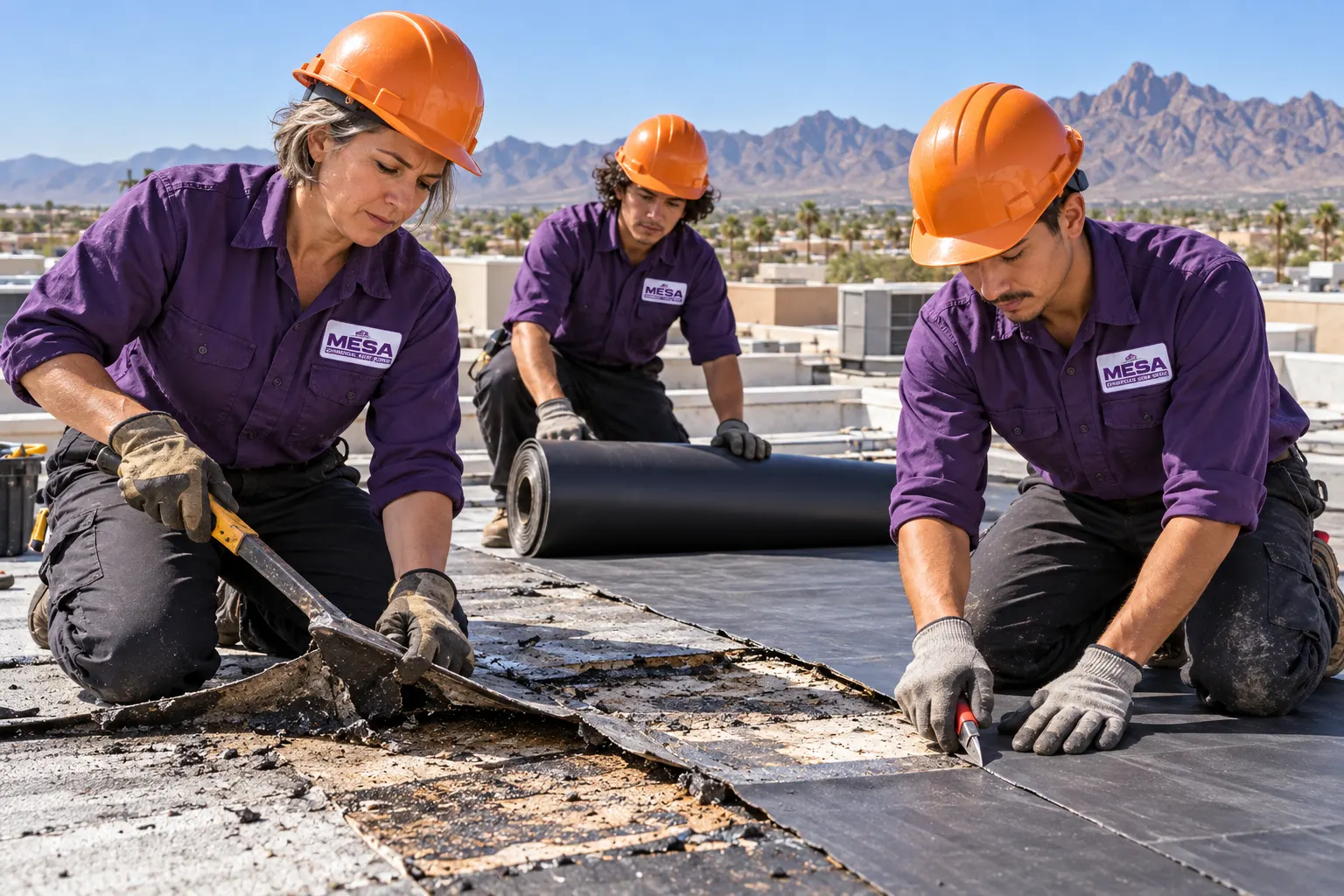
Flat Roof Repair
The low-slope roofs behind downtown parapets take membrane patches, drain work, and base flashing rebuilt where the roof meets the wall.
Flat Roof Repair details
Commercial roof repair in Downtown Mesa for older masonry storefronts, where water often enters through parapet coping and wall flashing before it ever reaches the membrane.
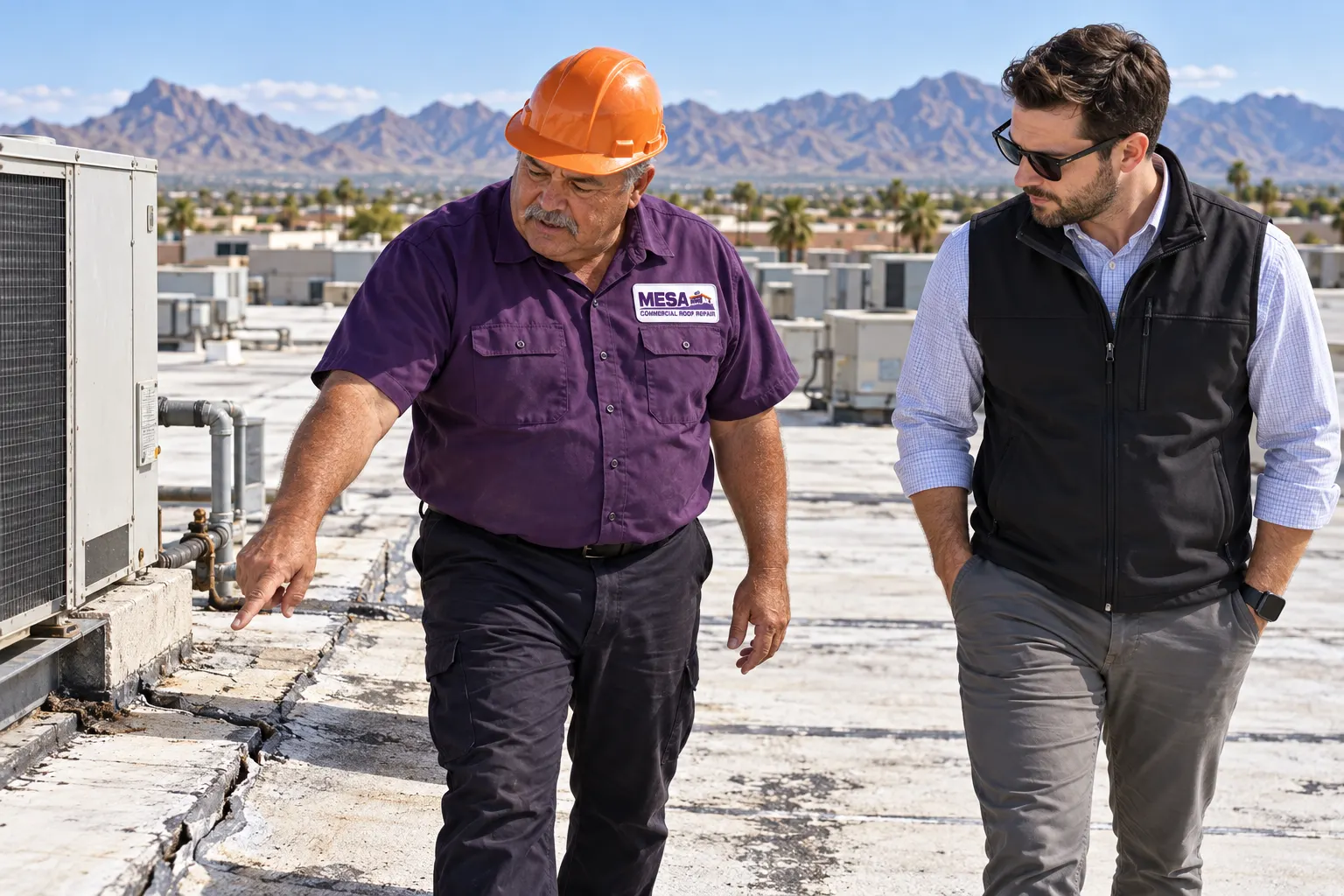
Older storefronts downtown sit behind parapet walls. When a stain shows up near the top of an interior wall, the roof membrane gets blamed first, yet the entry point is often an open coping joint or a gap where base flashing has pulled off the brick.
We test the coping, counterflashing, and base flashing before opening any membrane. Like-for-like repairs keep visible materials matching on buildings where looks matter.
These details cause most leaks on the masonry buildings near Main Street.
Metal or clay caps on top of the parapet separate at their joints, and rain runs down inside the wall. A reset cap with new sealant at each joint closes it.
Heat and movement peel the flashing where the roof meets the brick, leaving a gap at the bottom of the wall. New flashing gets tucked into a reglet or under counterflashing.
Through-wall scuppers on narrow roofs clog fast, and water stands against the parapet until it finds a way in. Clearing them before storm season prevents most of it.
A stain near the ceiling line on a brick wall points to the parapet above, which changes where the repair starts. We test the wall before cutting into the roof below it.
Rooftop units added after the original roof often sit on curbs flashed in a hurry, with corners that crack first. Each corner gets new flashing tied into the existing membrane.
Wind-driven rain during monsoon storms hits the parapet face sideways, so a dry-weather check can miss the opening. A sideways water test copies that storm pattern.
Repairs downtown protect the building fabric as well as the roof, because water in a masonry wall travels and stays.
Most downtown repairs fall under these two services.
The low-slope roofs behind downtown parapets take membrane patches, drain work, and base flashing rebuilt where the roof meets the wall.
Flat Roof Repair details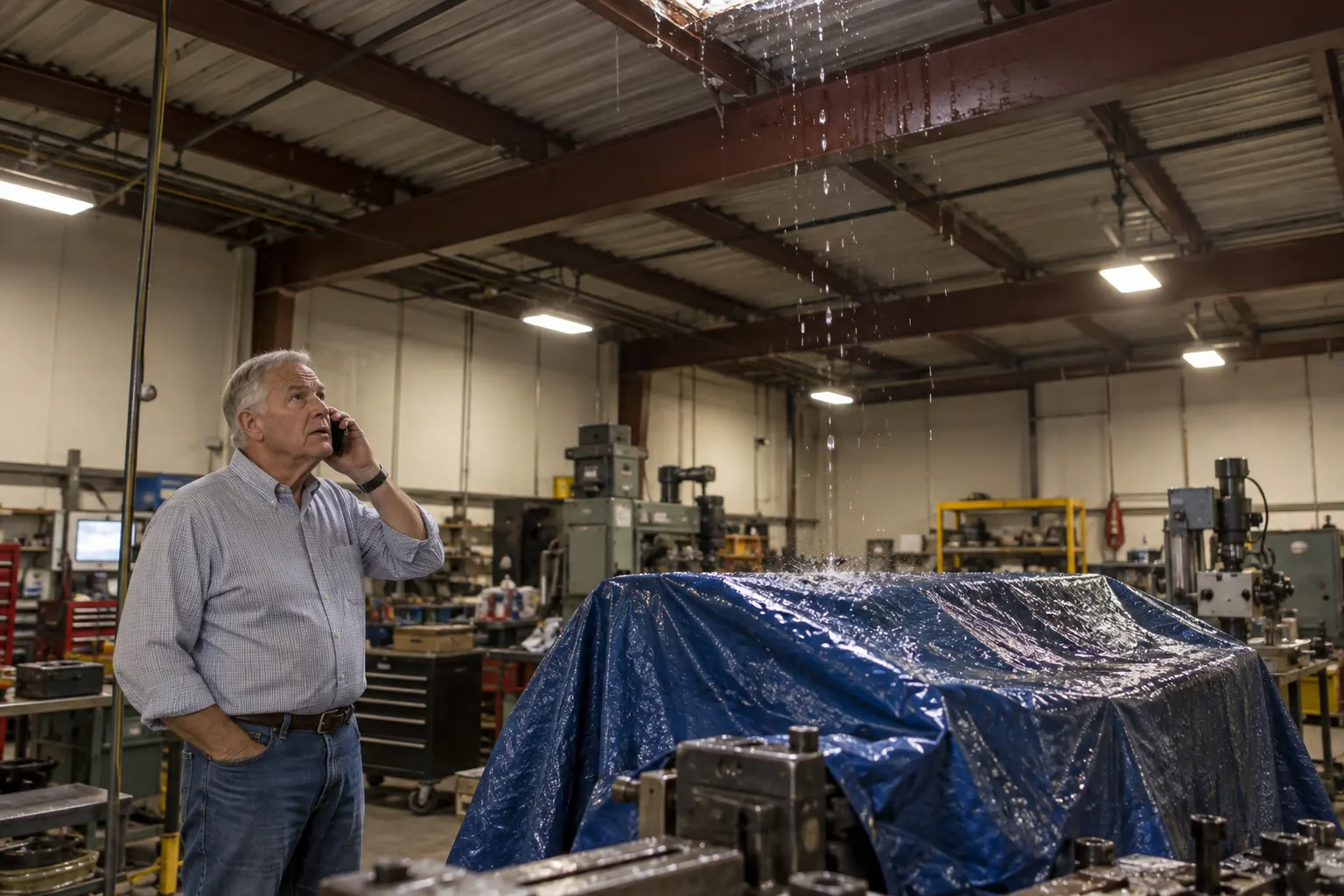
Stains high on brick walls need tracing to tell parapet water from roof water, and that test comes before any repair downtown.
Commercial Roof Leak Repair detailsThat pattern often points to the parapet. Tell us where the stain sits and how the roof is reached from the alley.
Prefer to talk? Call (623) 310-0176.
The steps match every repair we do, with a wall check added at the start.
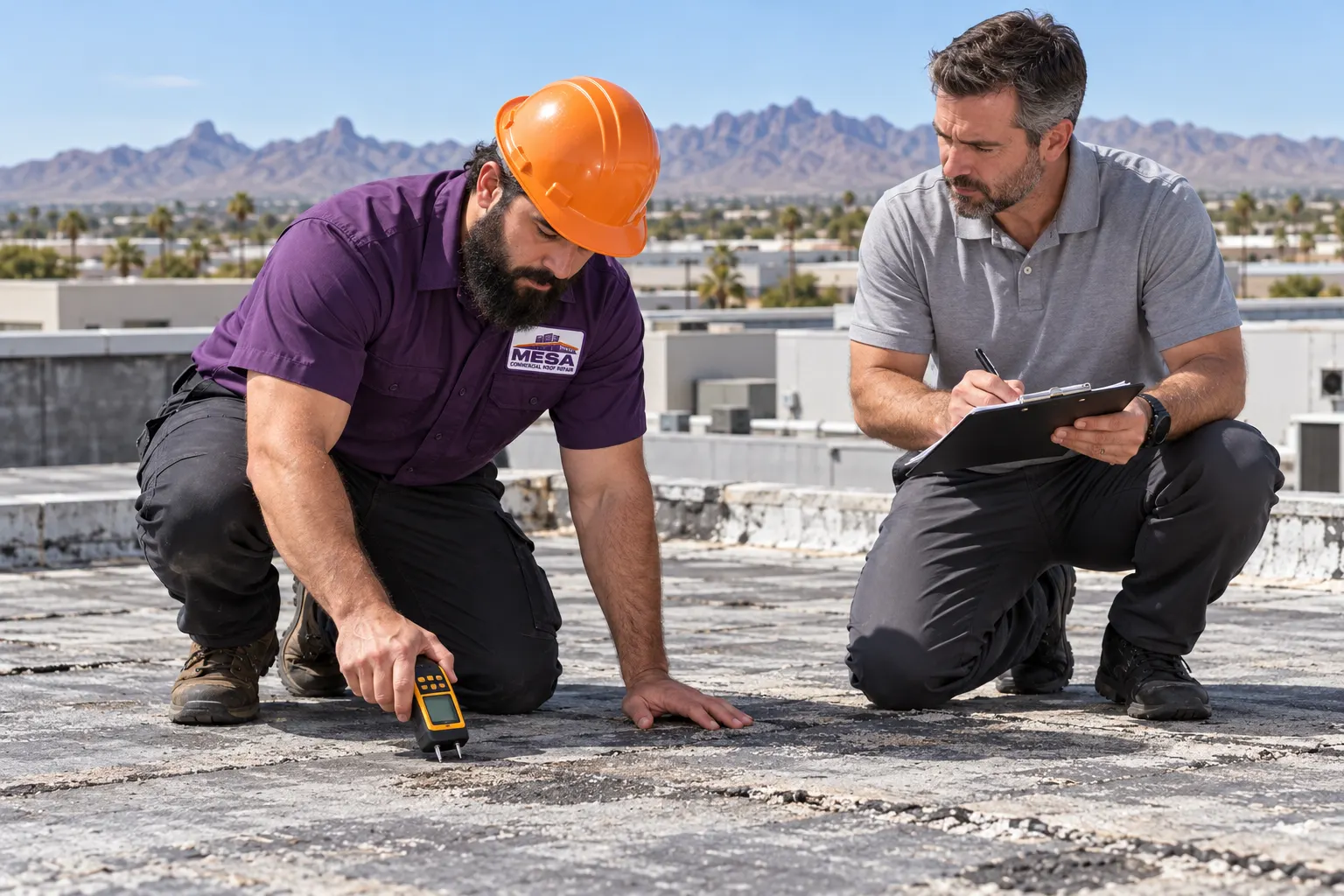
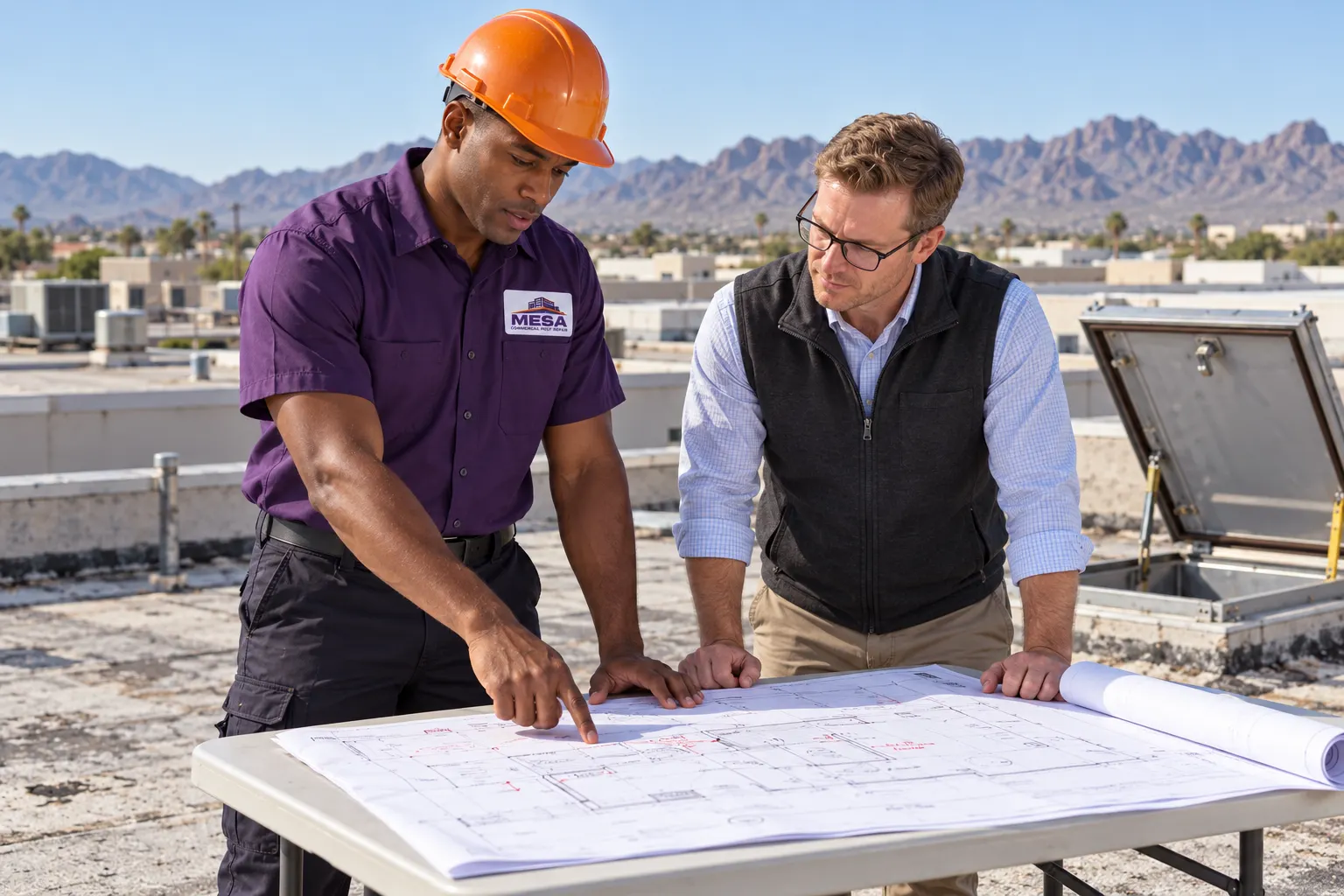
We check the parapet caps, wall flashing, and scuppers along with the membrane, since downtown leaks often start in the wall above the roof. Inside, we note how high each wall stain sits.
Water tests run on the coping first, then the base flashing, then the roof field, so each source can be ruled in or out. Each test runs long enough to show up inside.
Coping joints get reset or resealed, flashing gets rebuilt into the wall, and any wet membrane area is patched to match. Matching caps keep the street view unchanged.
The parapet and the repaired roof detail get a final water test, and photos show the wall and roof work separately. You see which source fed each stain.
Downtown sits at the center of our service area. These districts are a short drive away.
Northwest by Loop 202, with roofs full of rooftop units.
Southwest near US 60, with retail roofs that drain inward.
Northeast around Falcon Field, with hangars and metal shops.
Southeast near the airport, with skylight-heavy industrial roofs and long walkway routes.
Some do. Mesa has eight locally designated historic districts plus individual landmarks, and changes to designated buildings go through Certificate of Appropriateness review. Membrane work hidden behind a parapet stays out of view, but visible coping, metal panels, or equipment screens deserve a call to the city historic preservation office before materials are ordered.
By testing them separately. Water goes on the coping first, then the wall flashing, then the membrane, and the stain inside shows which test reached it.
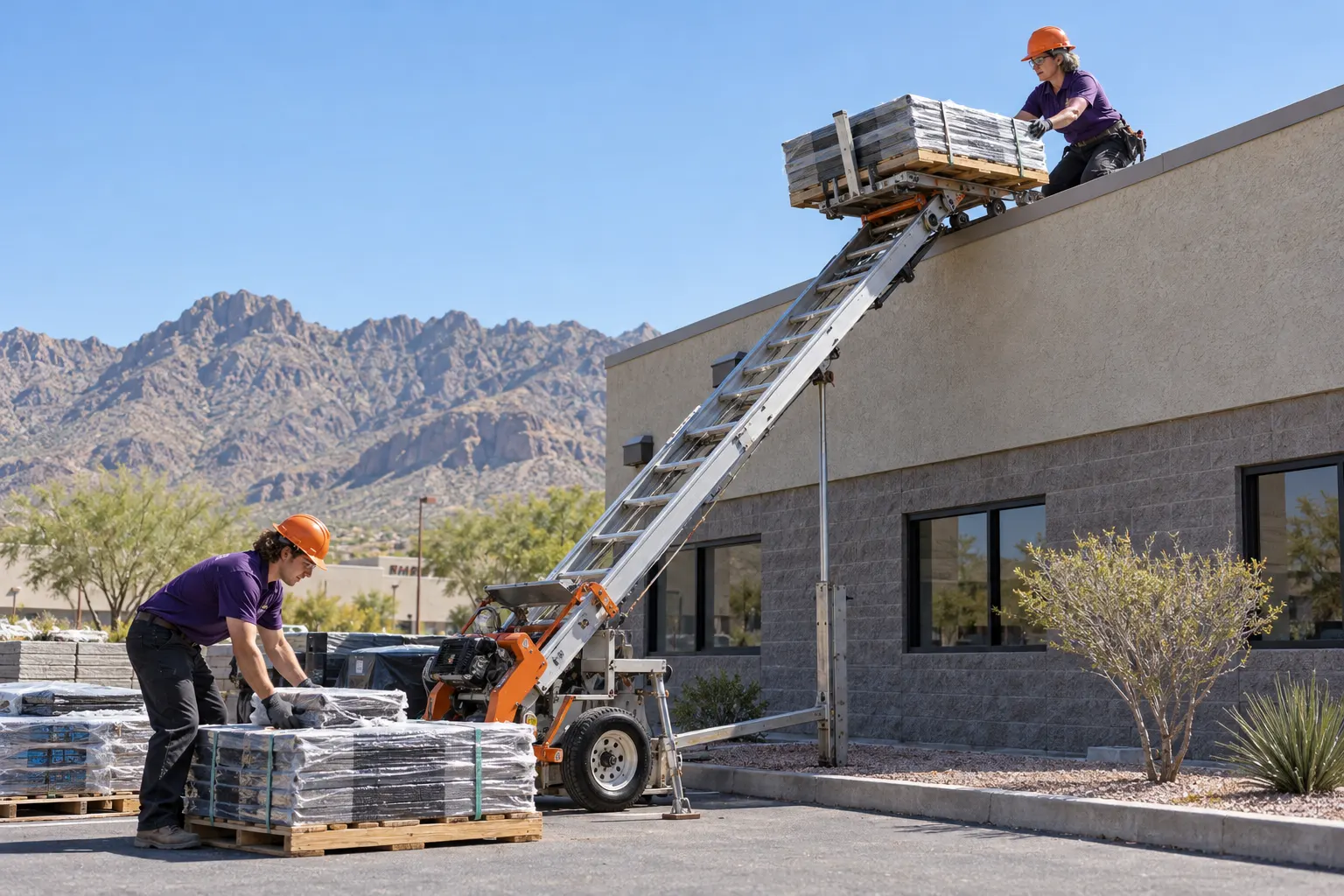
Usually, with a ladder hoist or a small lift. Material moves in early or late in the day so deliveries and trash pickup can still get through. Heavy rolls and pails go up in one lift, so the alley stays clear for most of the day.
Mostly low-slope membrane roofs: built-up, modified bitumen, and some newer single-ply. Each gets patched with its own material. Older built-up roofs may hide a second layer under the top one, so a core cut shows what is there before any patch.
Loose or cracked caps on the parapet get reset or replaced with matching pieces where possible. Where a match is hard to find, metal coping covers can go on after a historic review check if the building is designated.
Monsoon rain arrives sideways with the wind, hitting parapet faces and coping joints that stay dry in calm rain. Those details get a wind-direction water test.
City of Mesa Development Services handles downtown addresses. Scope matters, so we confirm with the city whether a given repair needs a permit before work starts.
Tell us where the stain is and how the roof is reached. We will check the parapet and the roof together.