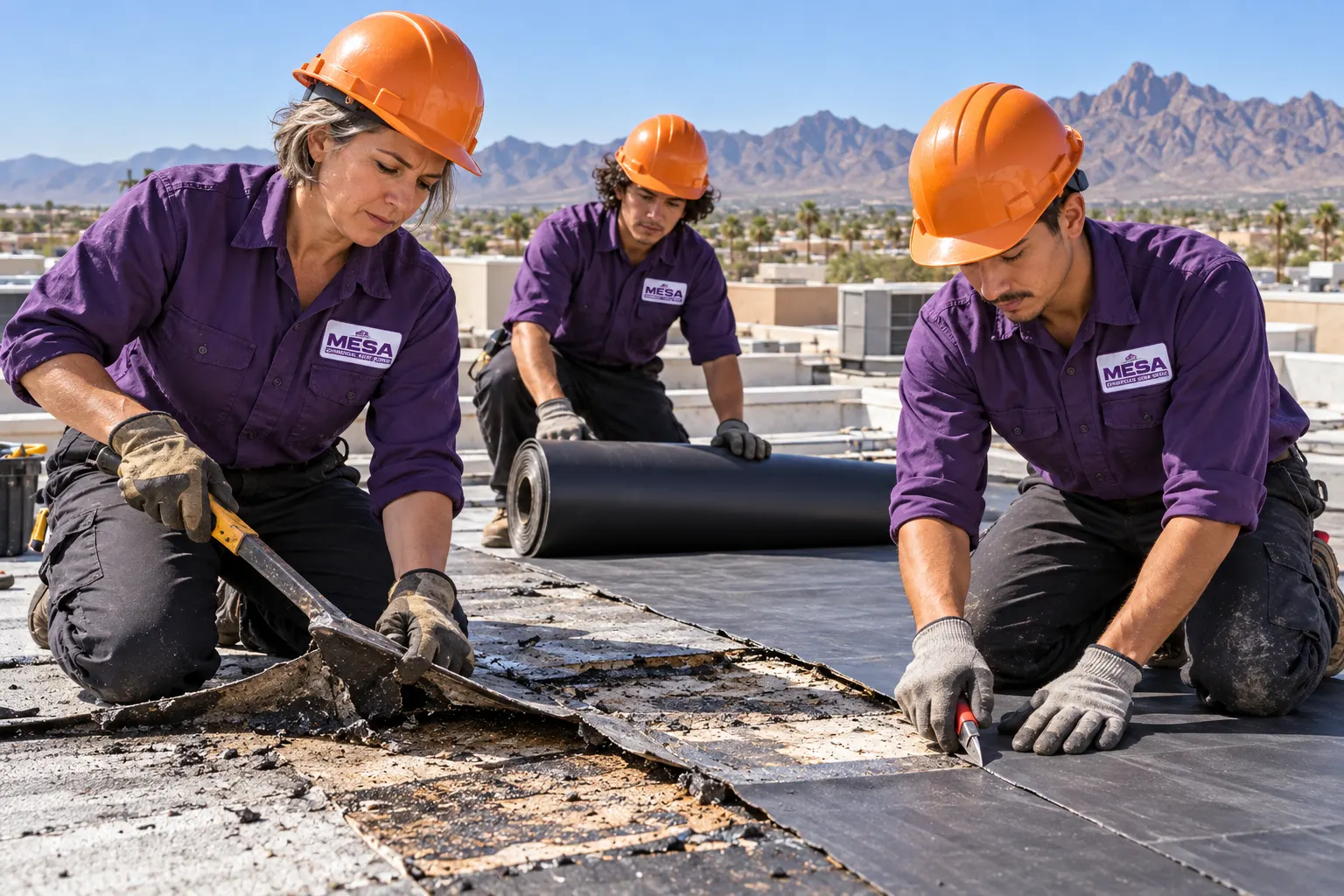
Flat Roof Repair
Most traced leaks on low-slope roofs end at a seam, drain, or curb, and the fix follows flat roof repair methods.
More on flat roof repair
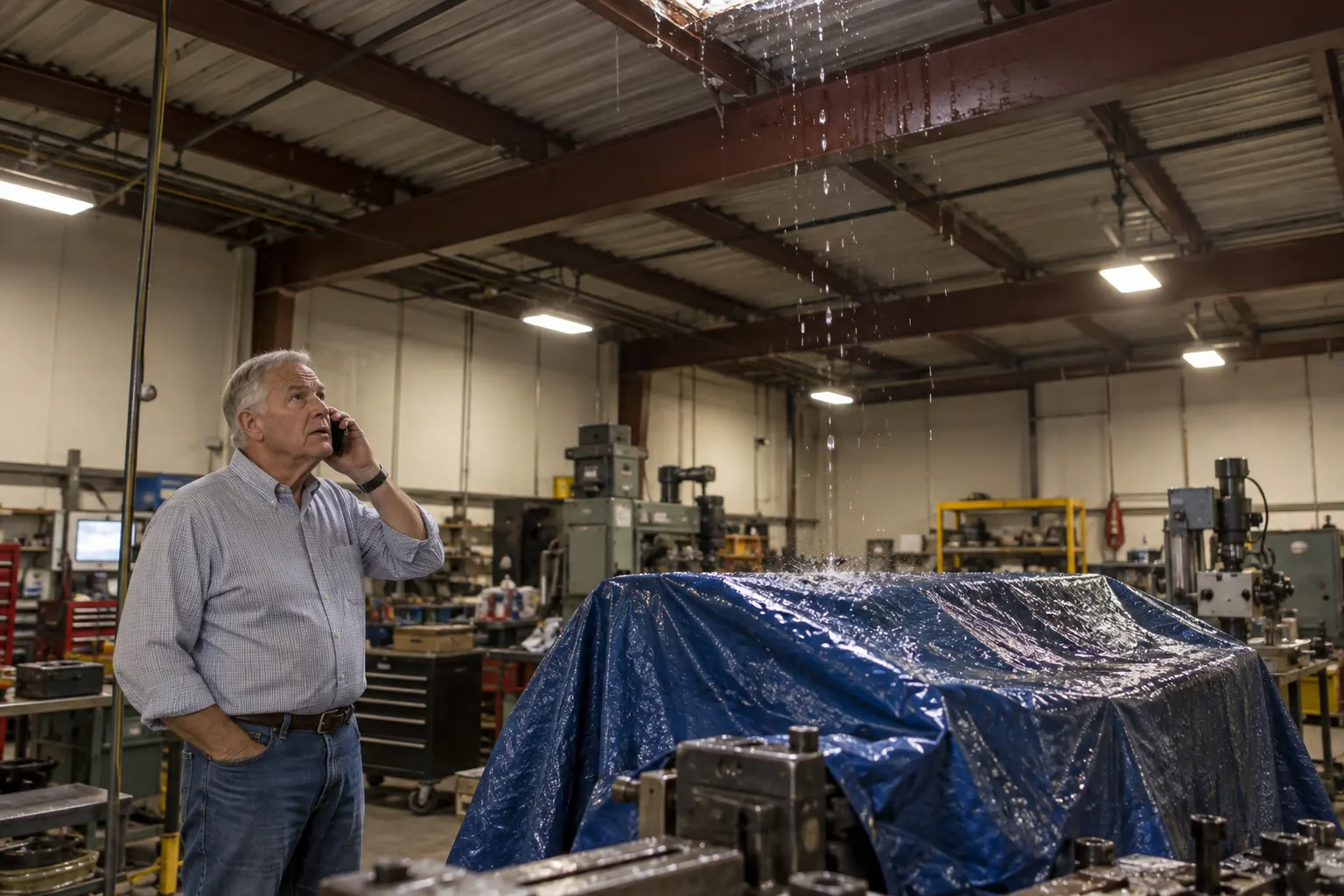
Commercial roof leak repair in Mesa that starts at the stain inside, traces the water back across the roof, and fixes the detail where it gets in.
A leak repair holds when it fixes the real entry point and the insulation around it dries out.
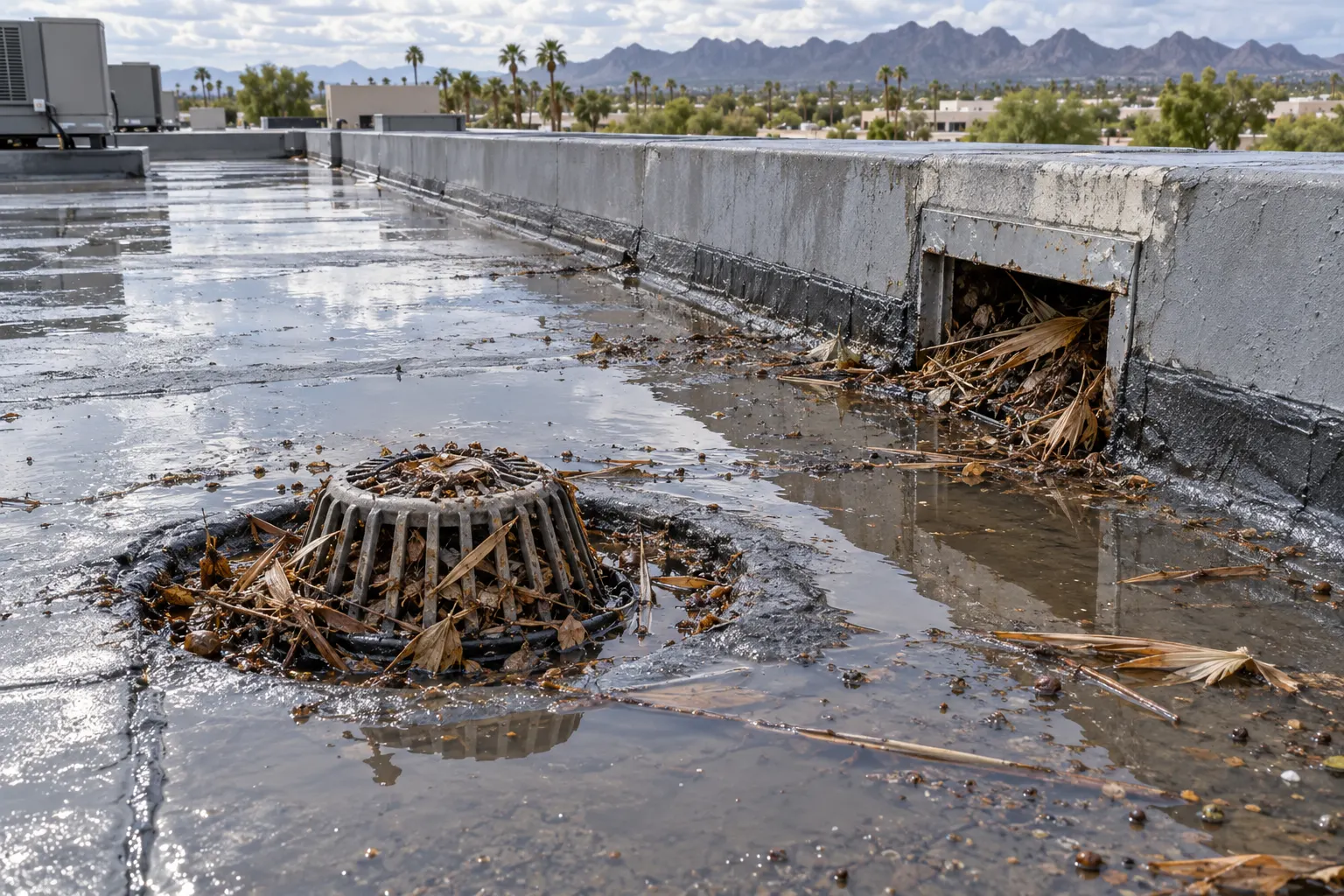
Water inside rarely drops right below its entry point. These are the details we test first when tracing a Mesa leak.
Cracked base flashing at a unit lets water run down inside the curb, then along the deck flutes to a distant ceiling tile.
A blocked drain leaves water standing above the flashing line, where it slips under the membrane around the bowl.
Sealant cracks at pipes and conduit, leaving a small gap that only leaks in heavy rain, which makes it easy to miss.
Open laps upslope of a stain feed water under the sheet, where it follows insulation joints for several feet.
Old sealant around skylight curbs lets wind-driven rain past the frame, and the drip lands well away from the skylight itself.
Rain entering a parapet cap runs down inside the wall and shows up as a stain near the top of an interior wall.
Leak work happens in two stages: stop the water, then fix the detail for good.
| Repair | What It Fixes | When It Is Enough |
|---|---|---|
| Roof cement and fabric | A split seam during an active storm | As a stopgap until the roof dries |
| Peel-and-stick patch | A puncture in the membrane | Until the permanent patch goes on |
| Weighted tarp | A failed curb or opening in a storm | For days, never months |
| Curb or boot reflash | The traced entry point at a penetration | Once insulation around it is dry |
| Wet insulation cut-out | Soaked board around the entry point | When the wet area stays local |
A traced and repaired leak stops damage that spreads quietly between the roof and the ceiling.
Call first if water is reaching stock or equipment. A temporary patch can slow it until the lasting repair is possible.
Prefer to talk? Call (623) 310-0176.
Leak repair is mostly finding the leak. Once the entry point is known, the repair is short.
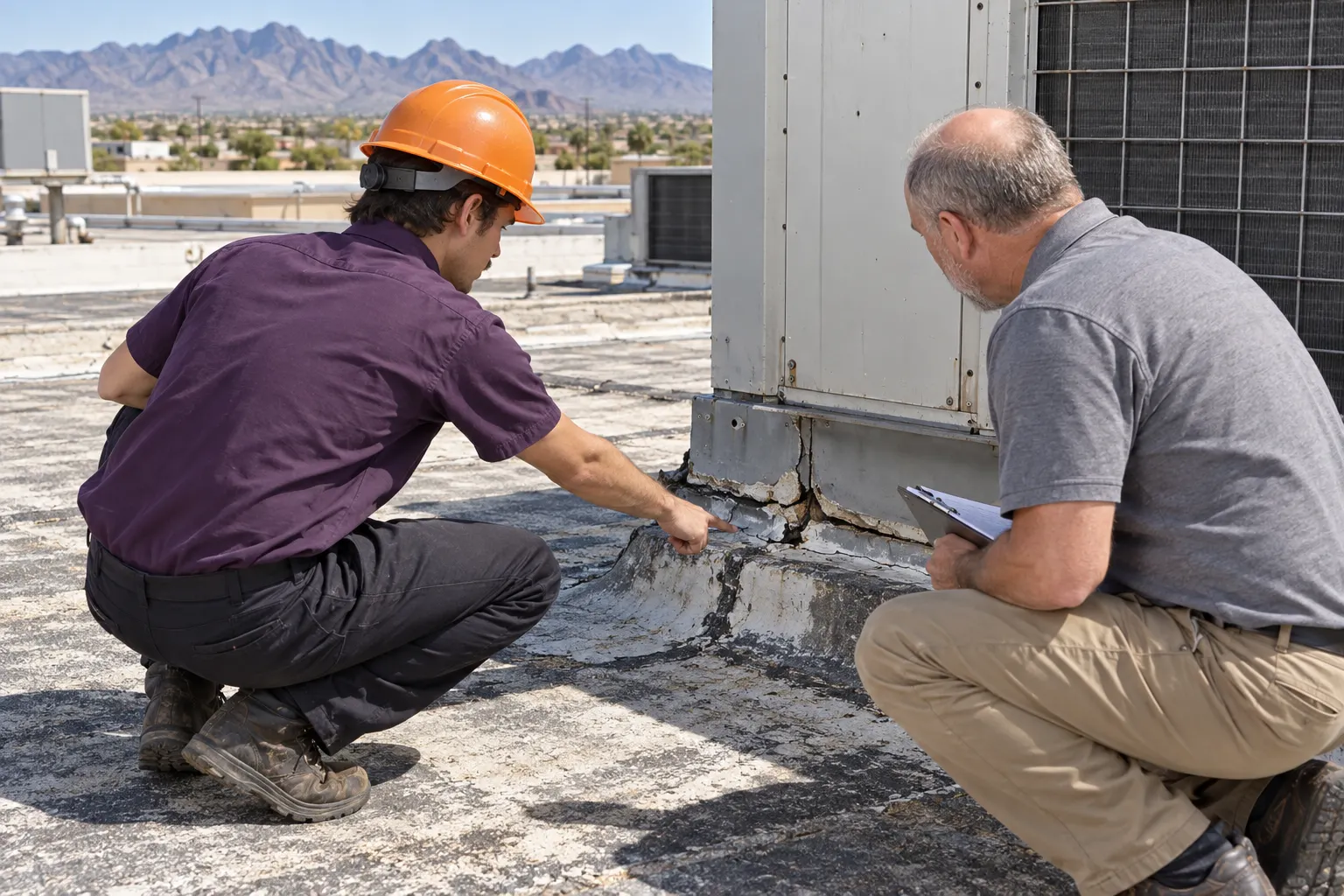
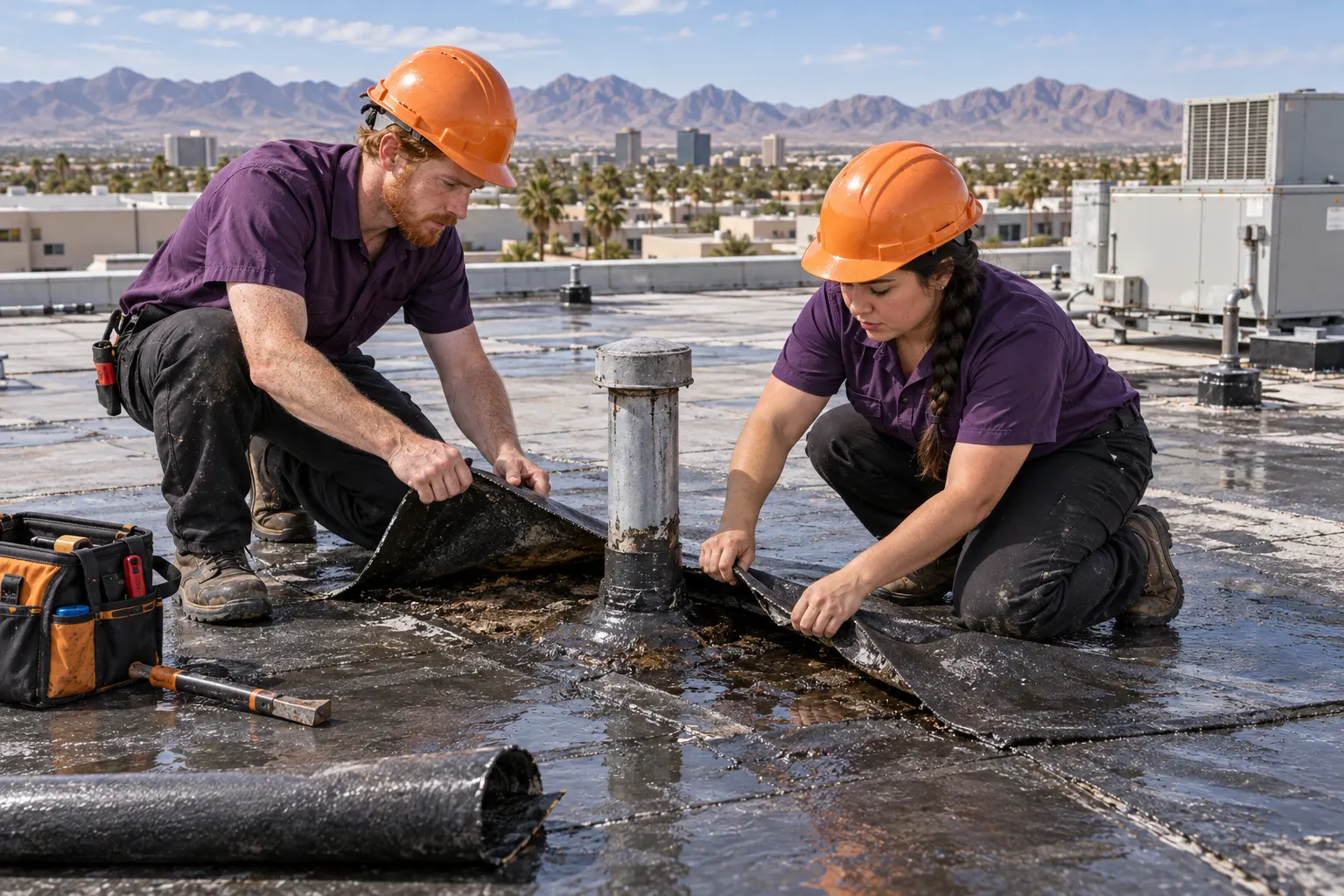
We start inside at the stain, note its height and spread, then walk the roof above it with a meter, checking every curb, seam, and drain upslope.
Infrared after sunset and controlled water tests on one detail at a time show which opening feeds the stain below.
The failed curb, boot, or seam gets rebuilt, and any soaked insulation around it is cut out and replaced with dry board.
A second water test on the same detail confirms the fix, and photos show the entry point before and after the repair.
Once the entry point is found, the repair usually falls under one of these.
Most traced leaks on low-slope roofs end at a seam, drain, or curb, and the fix follows flat roof repair methods.
More on flat roof repair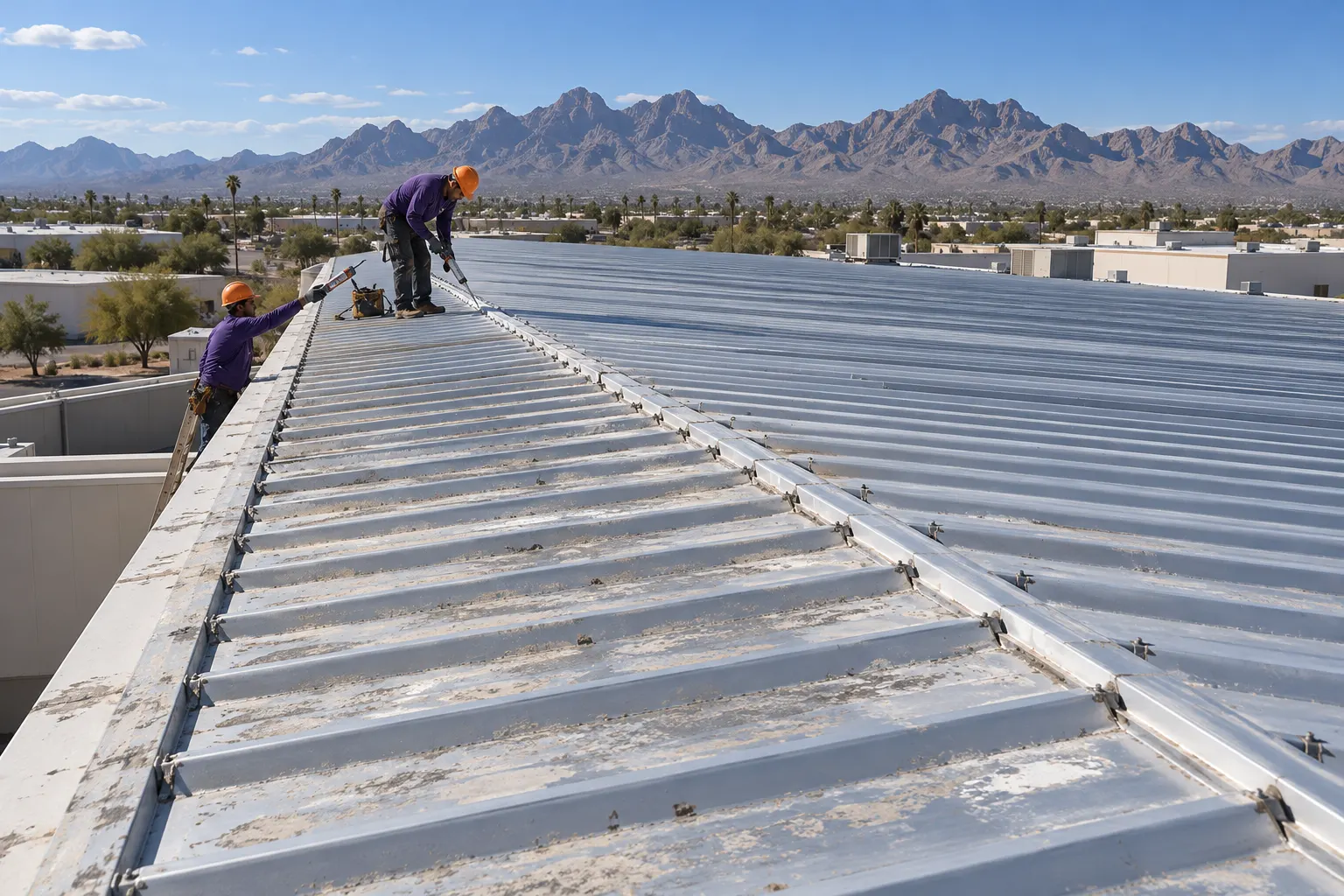
On metal buildings the trace usually ends at a screw row or lap, which calls for fastener and sealant work.
More on commercial metal roof repairWater slips under the membrane and runs along insulation joints or the flutes of a steel deck before it drips. That is why tracing starts at the stain and works upslope on the roof.
Usually. Meter readings and infrared scans show wet insulation in dry weather, and a controlled water test on one detail recreates the leak on demand.
Roof cement with fabric, a peel-and-stick patch, or a weighted tarp slows the water during storm season. It comes off once the roof dries, because it traps moisture if left for months.
Yes, before anything is moved or cleaned. Dated photos of stains, wet tiles, and the roof damage help the adjuster see the original condition.
Only to trace the stain and check the deck from below. The repair itself happens on the roof, and ceiling tile replacement is left to your maintenance team.
Repeat leaks after a repair usually mean a second entry point or wet insulation that never dried. A full moisture survey sorts out which one.
They show where the insulation holds moisture, which narrows the search. The scan works best after sunset, when wet board holds heat longer than dry board on the roof.
A stopgap goes on during the storm months, and the lasting repair follows on dry days. Most permanent patches need a dry, clean surface to bond.
Tell us where the stain is and when it drips. We will trace it on the roof and price the repair.