Commercial Roof Leak Repair
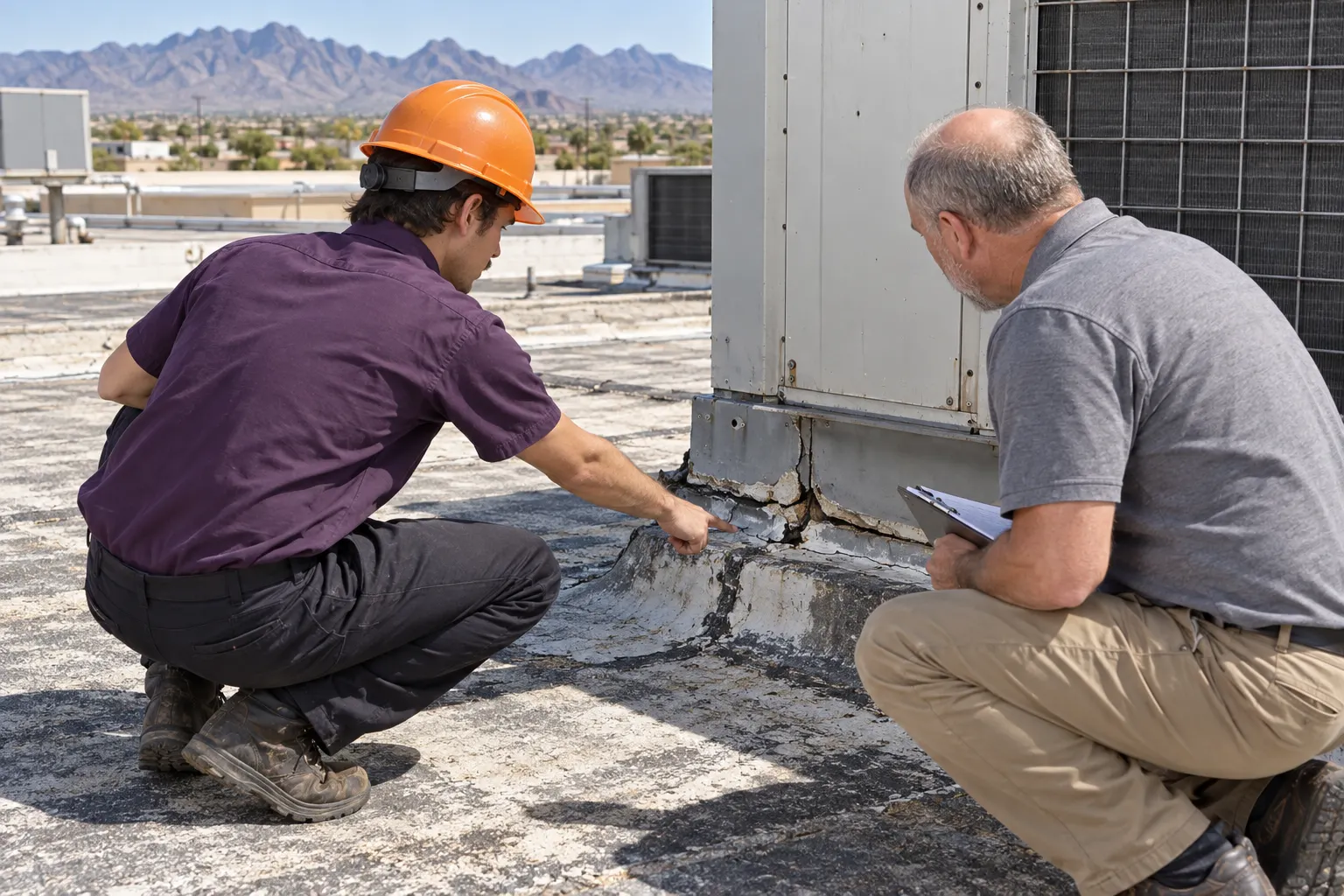
When the stain inside sits far from any obvious seam, leak tracing finds the real entry point before the flat roof patch goes on.
More on commercial roof leak repair
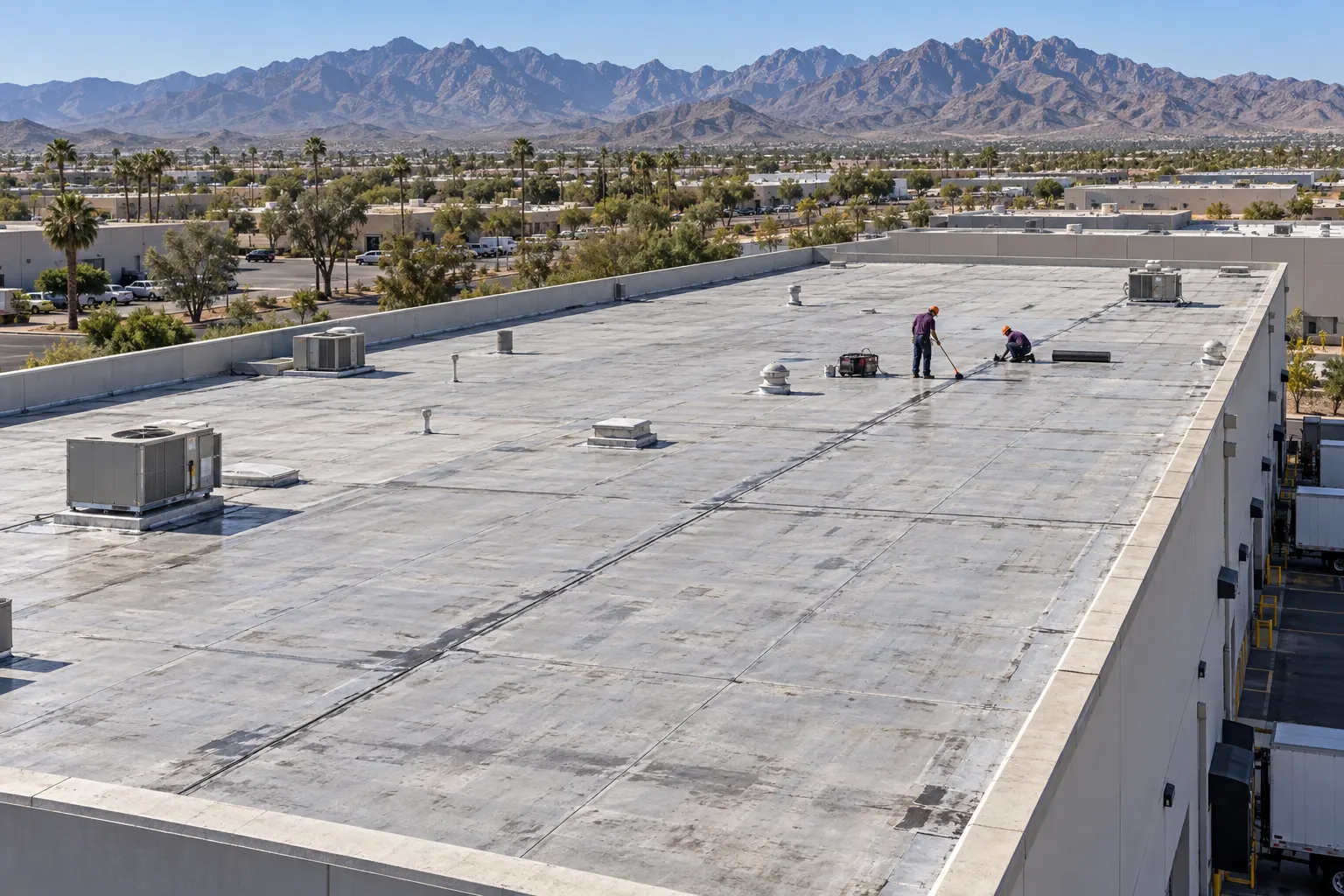
Flat roof repair in Mesa for TPO, EPDM, built-up, and modified bitumen roofs, aimed at the seams, drains, curbs, and edges where low-slope roofs leak first.
A flat roof patch lasts when the insulation under it is dry and the sheet around it still flexes.
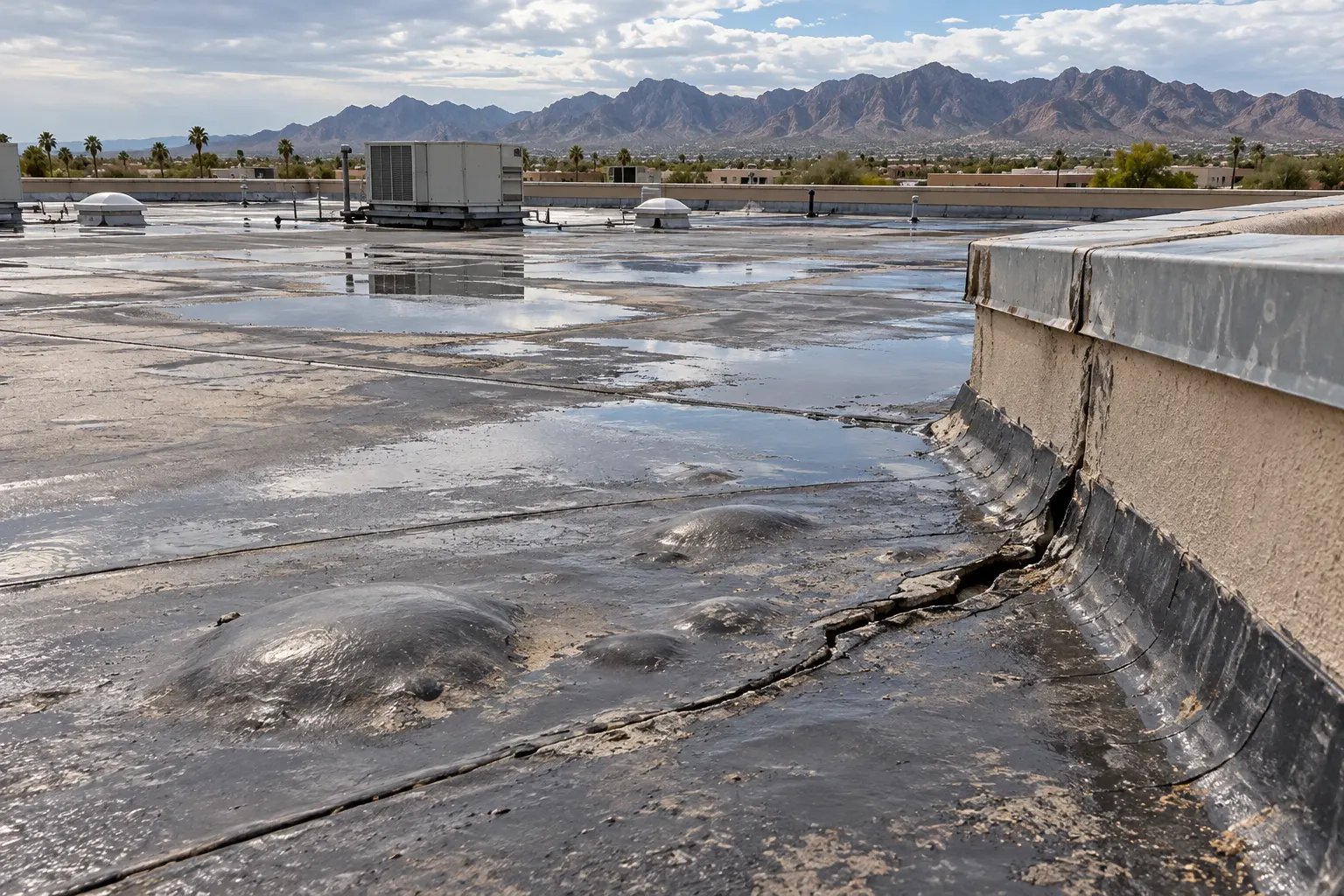
Mesa heat cycles a membrane every day. These five details open first, and each calls for a different repair.
Laps lose adhesion or weld strength after years of sun. A probe slides under the edge where the bond has let go.
Dust and leaves pack the strainer, so water stands against flashing after every storm and finds its way under the sheet.
HVAC curbs and exhaust fan curbs move with the equipment. Corners crack first, and water runs down inside the curb wall.
Where the roof turns up a parapet, the flashing pulls away from the wall and the coping joints above it open.
A dirt ring left after water evaporates marks a low spot where the membrane sits wet after each storm and ages faster.
Sealant at pipe boots and pitch pockets shrinks and cracks in the sun, leaving a ring of open gap where water gets in.
Each fix below targets one detail. Most visits combine two or three of them on the same roof.
| Repair | What It Fixes | When It Is Enough |
|---|---|---|
| Seam weld or cover strip | Open TPO laps, peeling EPDM seam tape | The sheet on both sides is still flexible |
| Blister cut-out and patch | Raised blisters in built-up and mod bit plies | Insulation under the blister reads dry |
| Drain bowl reset | Loose clamping rings and broken strainers | The deck around the drain is firm |
| Tapered insulation or cricket | Ponding behind curbs and at low spots | The low spot is from crushed board, not the deck |
| Base flashing rebuild | Split flashing at walls and curbs | The wall and coping above are tight |
Fixing a flat roof detail early keeps the water out of the insulation, which is the costly part to replace.
Flat roof leaks are easier to trace before the next storm spreads the water. Share what you see and we will look.
Prefer to talk? Call (623) 310-0176.
Four steps take a flat roof from a leak report to a tested repair.
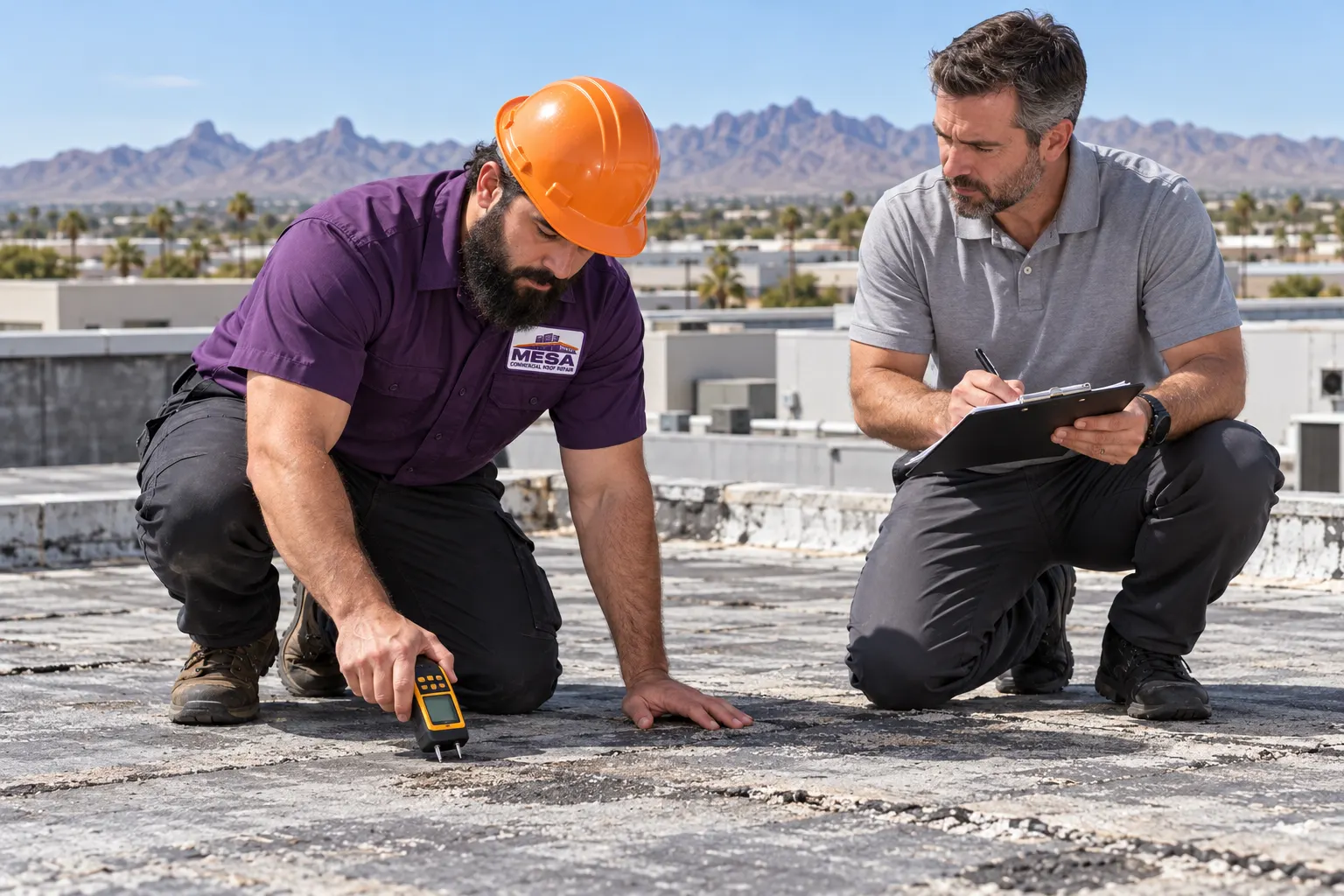
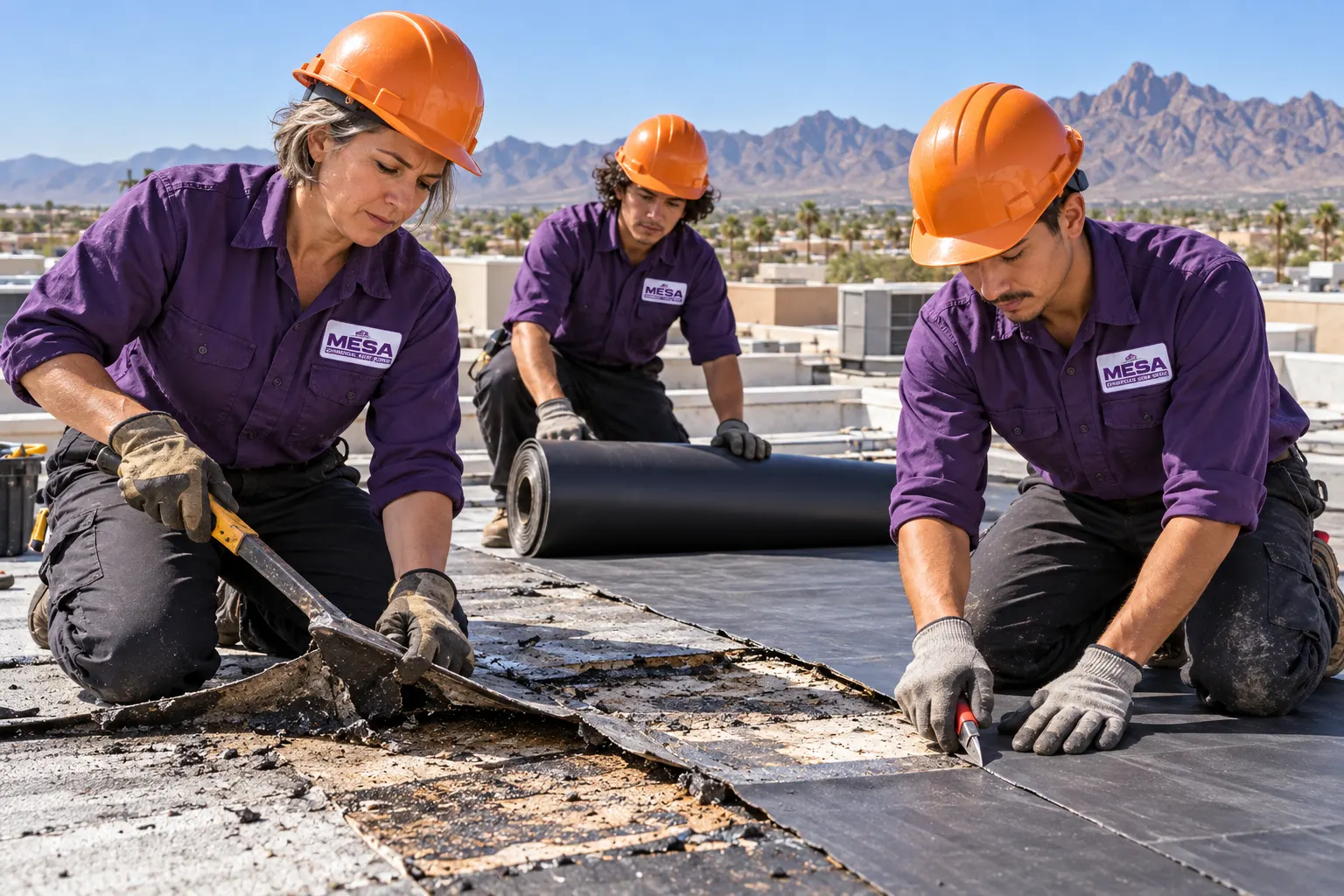
We probe the seams, clear and check each drain, and take meter readings so wet insulation is marked before any membrane comes up.
Stains inside get matched to roof details above, following slope toward the curbs and seams that sit upslope of each one.
Soaked board is cut out and replaced, then new membrane of the same type is welded, taped, or torched over the area.
Each patched seam and drain gets water before we leave, and photos record the roof before and after.
Flat roof problems often overlap with these two services.
When the stain inside sits far from any obvious seam, leak tracing finds the real entry point before the flat roof patch goes on.
More on commercial roof leak repair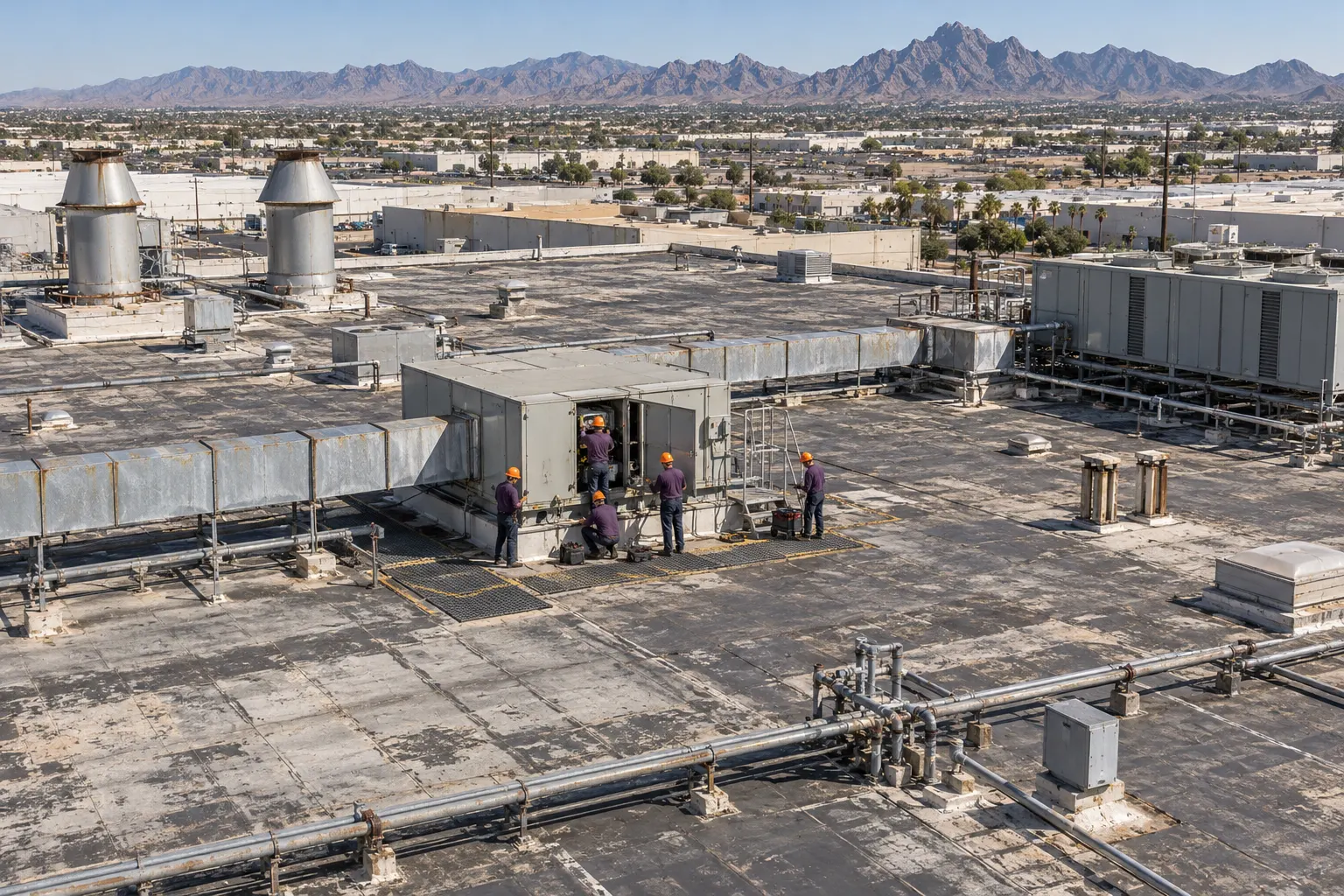
Plant roofs are flat roofs with heavy equipment on top, so stack and fan curb work follows the same membrane rules.
More on industrial roof repairAt the edges and openings. Heat-worn seams, drains packed with dust, curbs under HVAC units, coping joints at parapets, and pipe boots with cracked sealant account for most flat roof leaks we trace in Mesa.
No. TPO and EPDM need their own patch materials and primers. Mixing them leaves a lap that never bonds, so the repair matches the existing sheet.
Moisture or air trapped between plies expands in the heat and lifts the layers. Small, dry blisters get watched; cracked ones get cut out and patched before water reaches the insulation.
Meter readings across the roof show the wet areas, and a small core cut confirms what is under the membrane. Wet board comes out before the patch goes on.
Gravel gets swept back from the repair area so the plies underneath can be cleaned and patched, then the gravel goes back to protect the new layers from sun.
Sometimes, after the seams and flashing are fixed. A reflective coating over sound repairs can cut heat on the sheet, and a product from the Cool Roof Rating Council list keeps utility programs open.
Around them. Flashing at rack posts and conduit runs gets the same repair as any roof penetration, and panels stay in place unless the leak sits directly under one.
Patching waits until the area is dry. During monsoon season a temporary seal goes on first, and the lasting repair follows once the membrane and insulation dry out.
Tell us the membrane type, if you know it, and where water shows up. We will inspect the roof and price the repair.