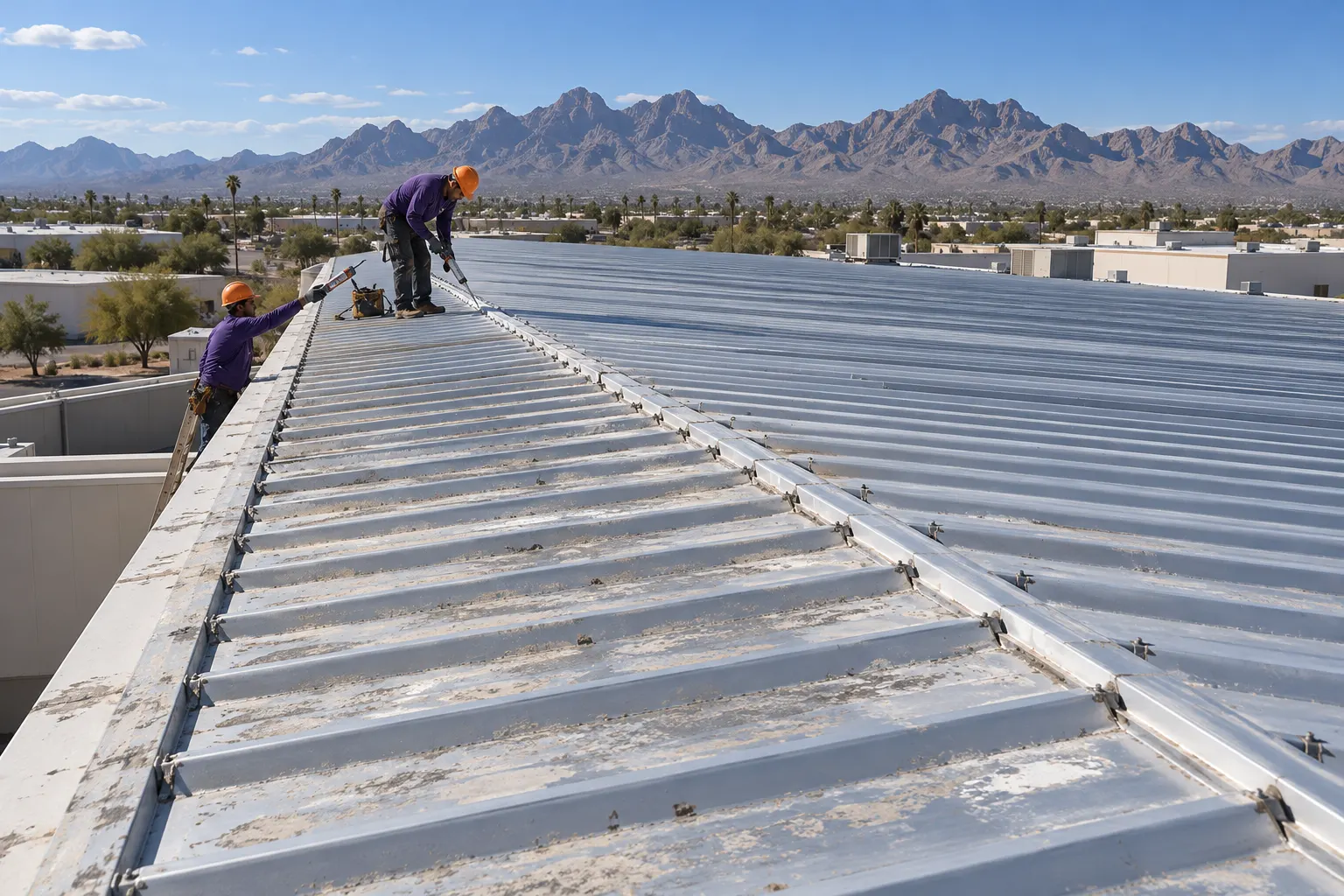
Commercial Metal Roof Repair
Many plants and hangars have metal sections, where fastener rows and laps need the same attention as the membrane areas.
More on commercial metal roof repair
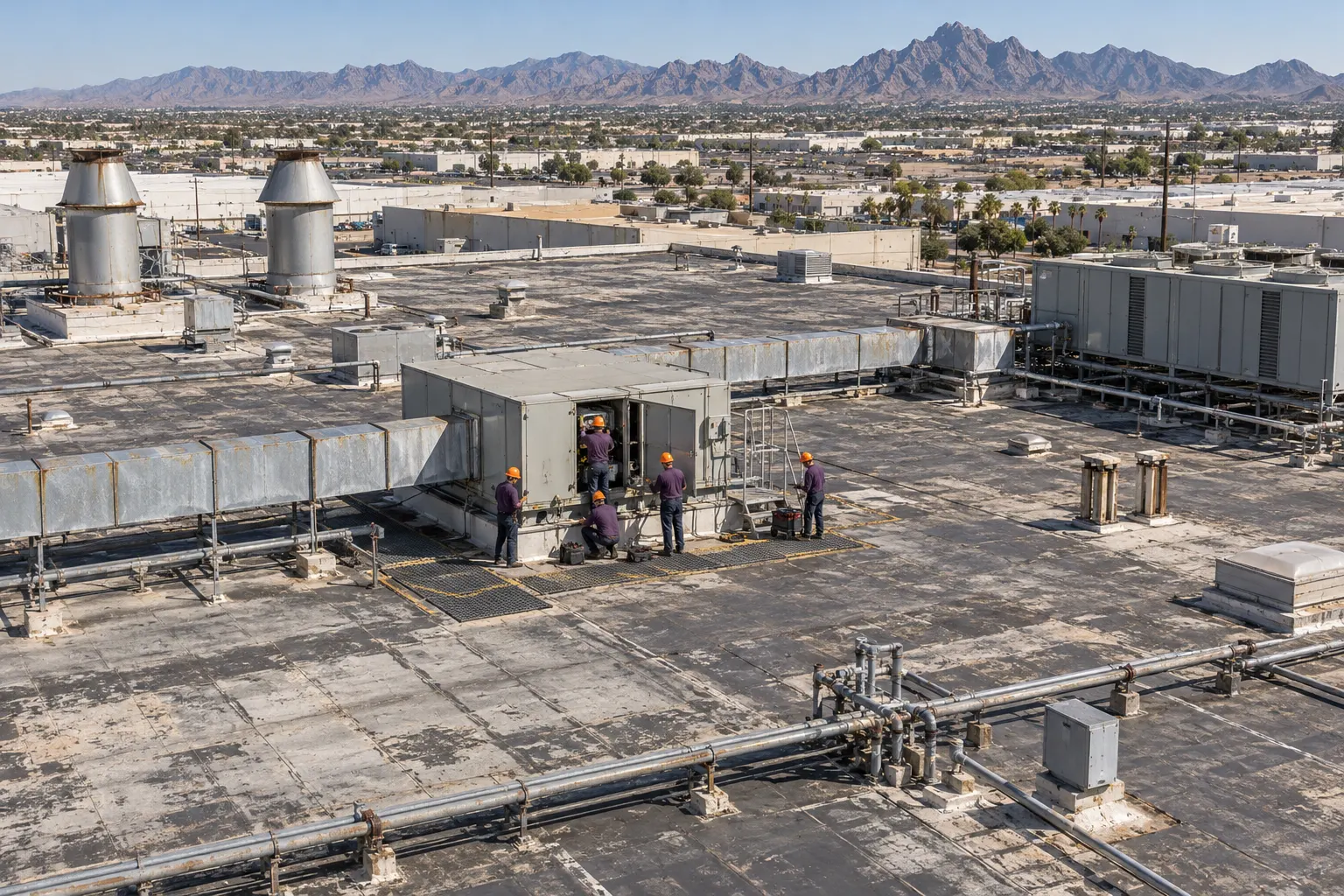
Industrial roof repair in Mesa for plants and warehouses with exhaust stacks, process vents, and heavy curbs, planned with your facility manager so the lines keep running.
Industrial roofs repair well when the damage sits around equipment and the field of the roof is still in shape.
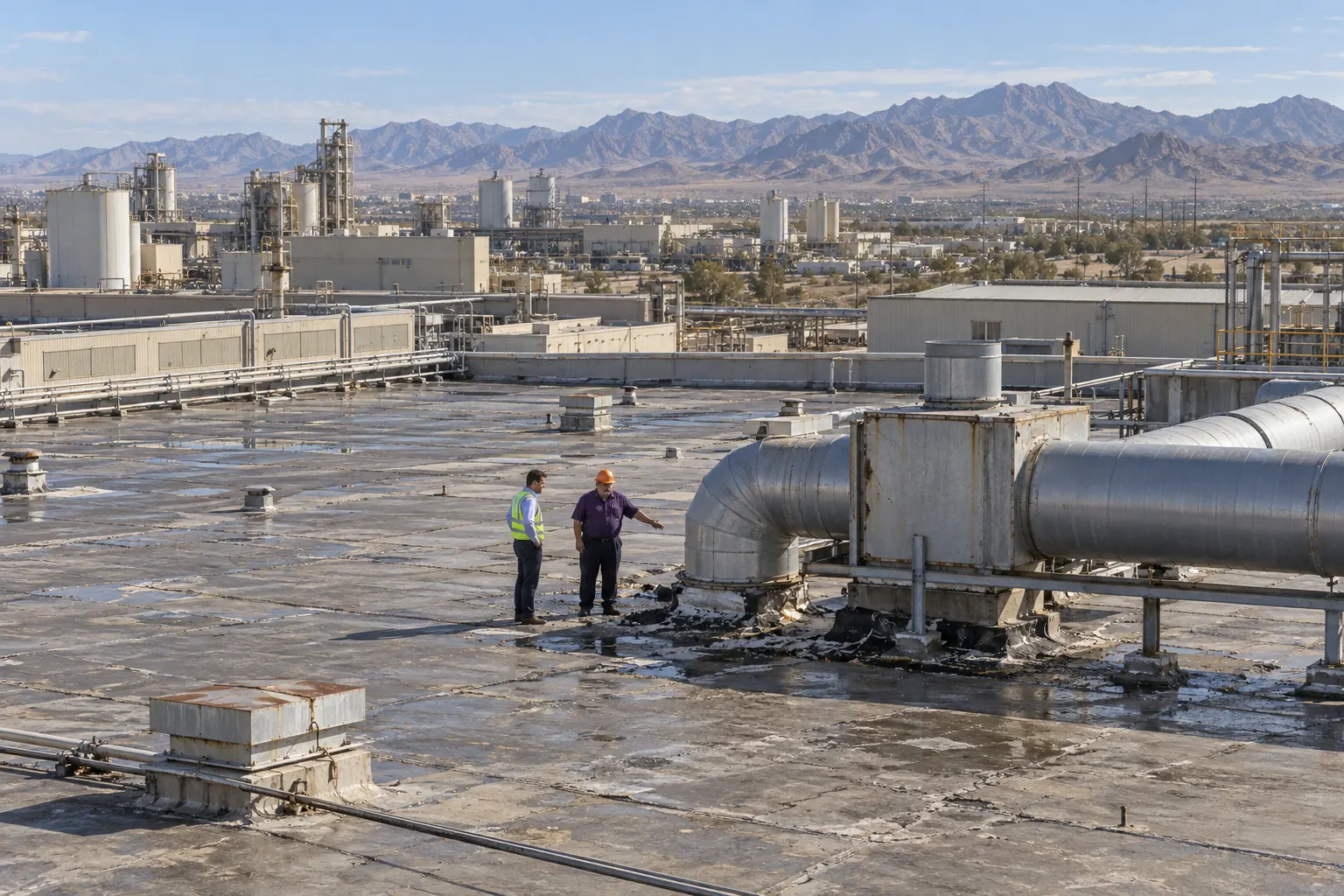
Plant roofs fail around the equipment first. These five spots get checked on every industrial roof walk.
Heat at the stack base dries the flashing until it cracks, and the joint around the stack opens under the rain.
Vibration from fans and air handlers loosens counterflashing and splits the corners of each curb.
Grease, heat, or process residue at outlets breaks down membrane near the vents until it tears underfoot.
Long rows of skylights mean many curbs, and the sealant on each one ages at the same pace.
Debris from fans and process vents collects in drains between units, so water backs up around the curbs during storms.
Maintenance crews crossing the roof leave punctures and scuffs along the paths between units.
Industrial repairs fit around production, so each fix is planned with a work window.
| Repair | What It Fixes | When It Is Enough |
|---|---|---|
| Stack flashing rebuild | Cracked flashing at hot exhaust stacks | The stack collar and curb are solid |
| Fan curb reflash | Split corners and loose counterflashing | The curb is level and dry inside |
| Membrane section repair | Residue-damaged sheet near vents | Damage stays near the outlets |
| Walkway pads | Punctures along service routes | Traffic stays on marked paths |
| Skylight curb reseal | Aged sealant around skylight frames | The frames and curbs are tight |
| Pipe support flashing | Leaks at conduit and pipe supports | Supports sit on pads over the membrane |
Industrial roof repairs protect the equipment and the process below as much as the roof itself.
Plant roof leaks over equipment need planning before anyone climbs up. Share the shutdown windows and the roof layout.
Prefer to talk? Call (623) 310-0176.
Industrial repairs add a planning step, so the roof work never surprises the people running the plant below.
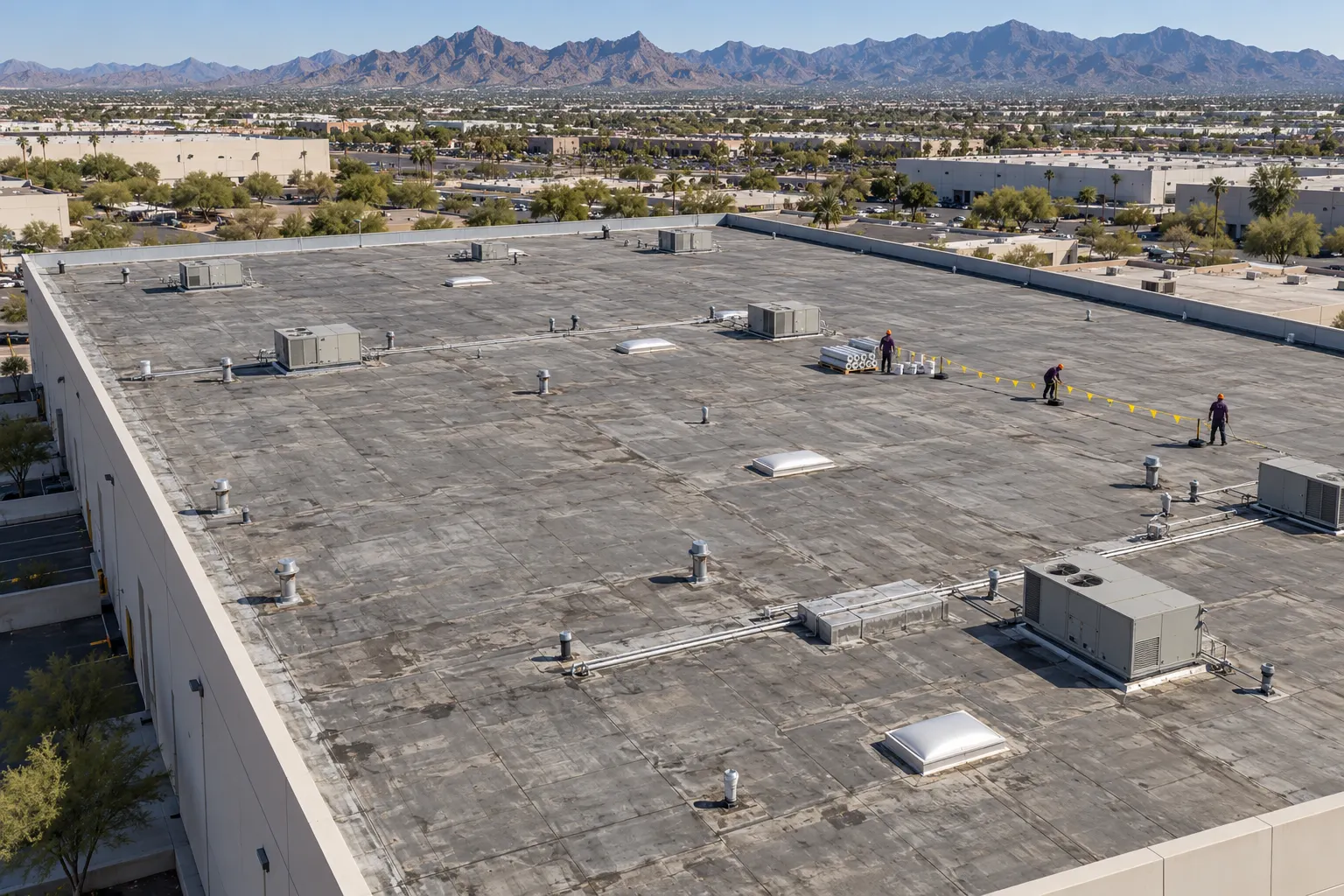
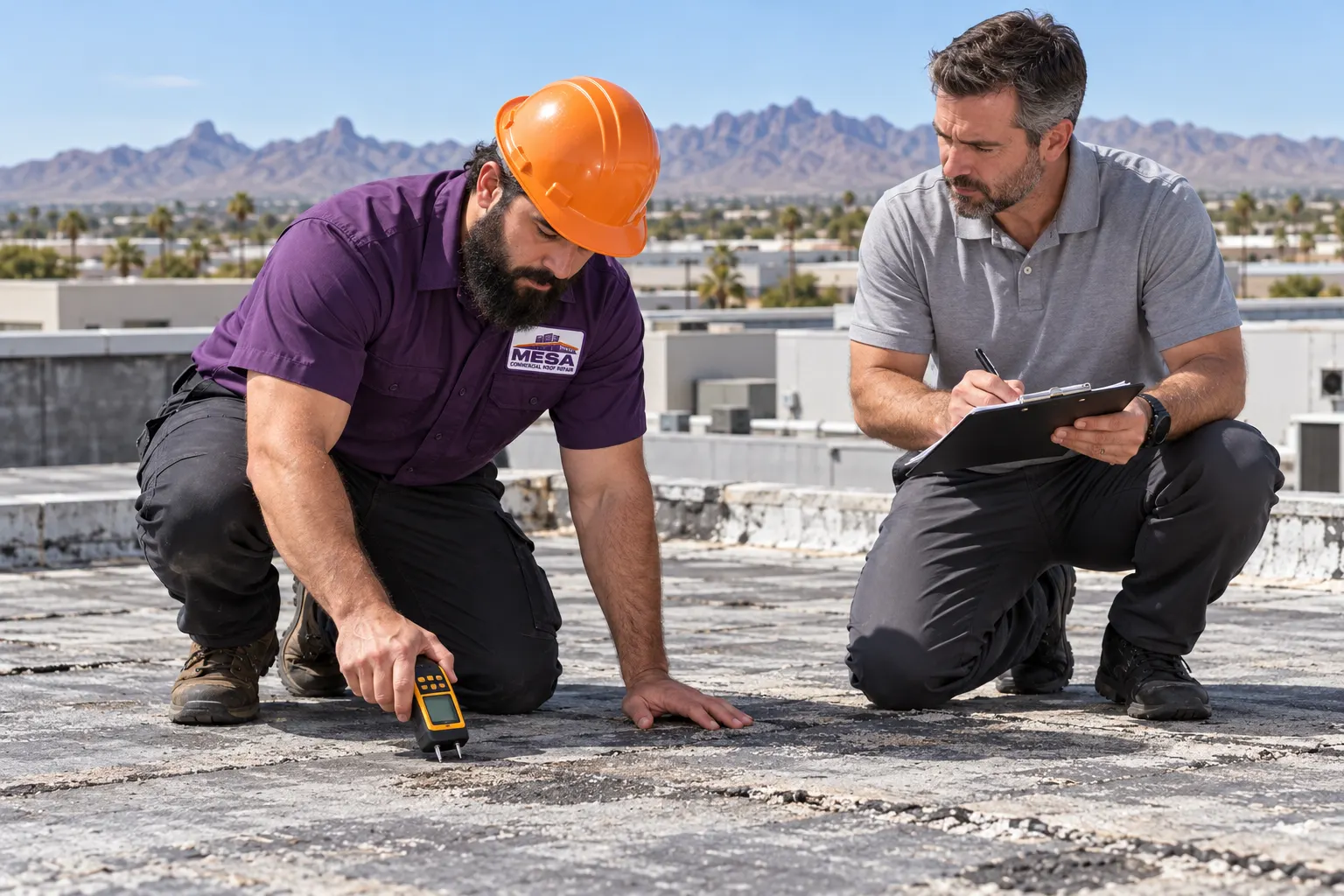
We walk the roof with your facility manager, mapping hot exhaust zones, discharge points, and lines that must keep running, and we mark wet insulation with a meter before any work is planned.
Leaks get traced around the equipment, checking stack collars, curb corners, pipe supports, and the membrane near every vent outlet, then matched to stains on the plant ceiling below.
Flagged work zones and fall protection go up first, then curbs, stacks, and damaged membrane get repaired during the agreed shutdown or weekend window.
Repaired curbs and stacks get water-tested once the equipment is back on, and photos go to your maintenance file with each roof location marked on a sketch.
Industrial buildings mix roof types, so these services often join an industrial repair.
Many plants and hangars have metal sections, where fastener rows and laps need the same attention as the membrane areas.
More on commercial metal roof repair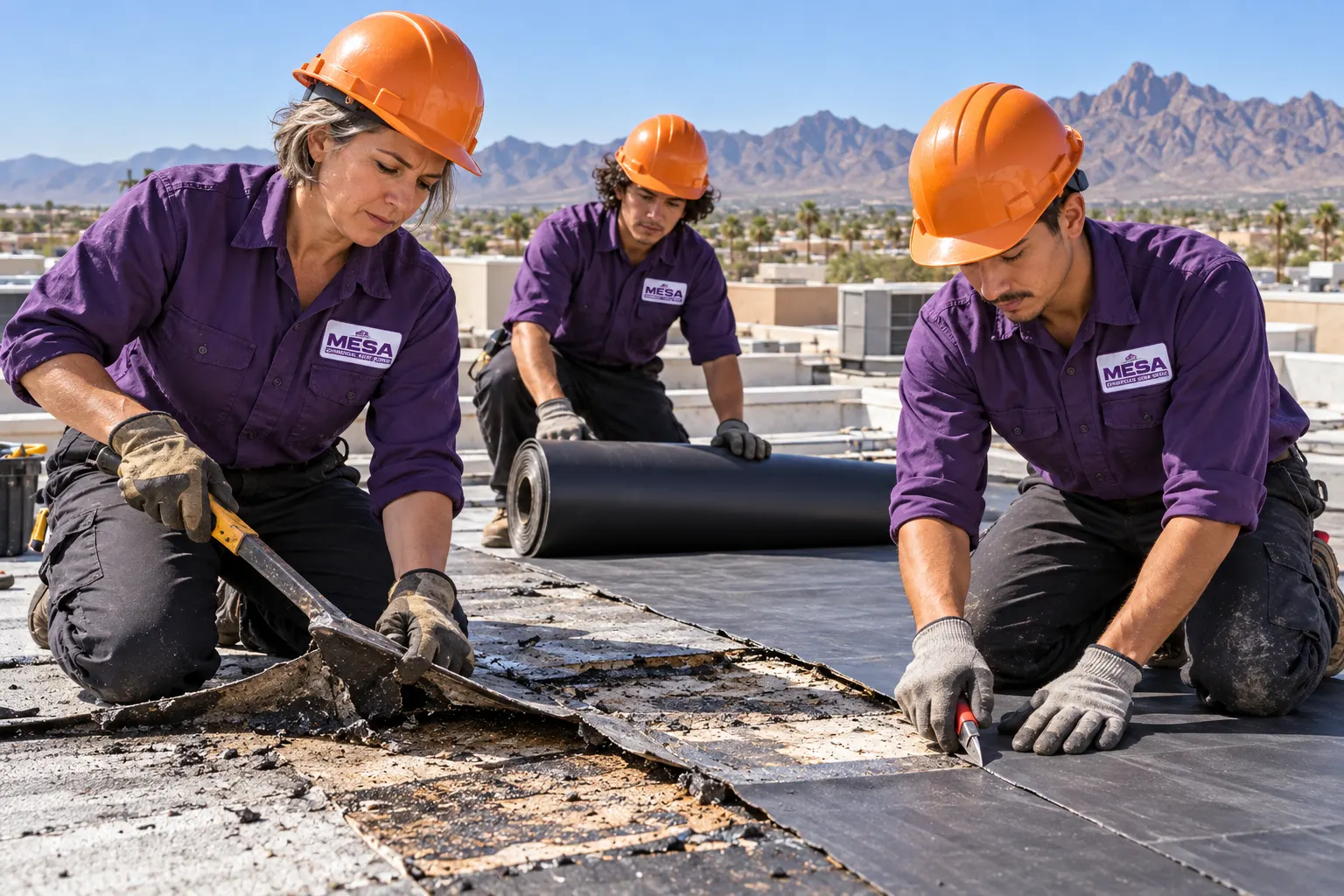
The membrane field between the equipment follows flat roof repair, from seam welds to drain resets.
More on flat roof repairMost of the time. The roof gets mapped with your facility manager first, and work near a stack or fan curb waits for a planned shutdown or a weekend shift.
Heat, grease, and process residue coming out of vents break down the sheet over time. Damaged areas get cut out and patched with material rated for that exposure.
Skylight-heavy spans get guarded before work starts, and flagged lines mark the work zone. Industrial roofs near Falcon Field and the Gateway Area often need this first.
Yes. Pads along the routes HVAC and maintenance crews use spread the load and stop punctures in the membrane between units.
Your maintenance team. We agree on which fans and intakes shut down, and for how long, before the repair window starts. A short list of the units, shutdown times, and the restart check goes to the plant before anyone works near the roof equipment.
Low-odor sealants and covered intakes keep fumes out. Work near an air intake gets scheduled when that unit is off, or on a cool morning with the wind carrying fumes away from the roof intake.
Hangar and shop roofs in the Falcon District get the same planning, with metal panel and skylight repairs worked around the aircraft and equipment inside.
Those get the first stopgap. Plastic sheeting goes on inside, and the roof detail above gets a temporary seal until the lasting repair window.
Share the roof layout and the work windows. We will plan the repair around the plant.