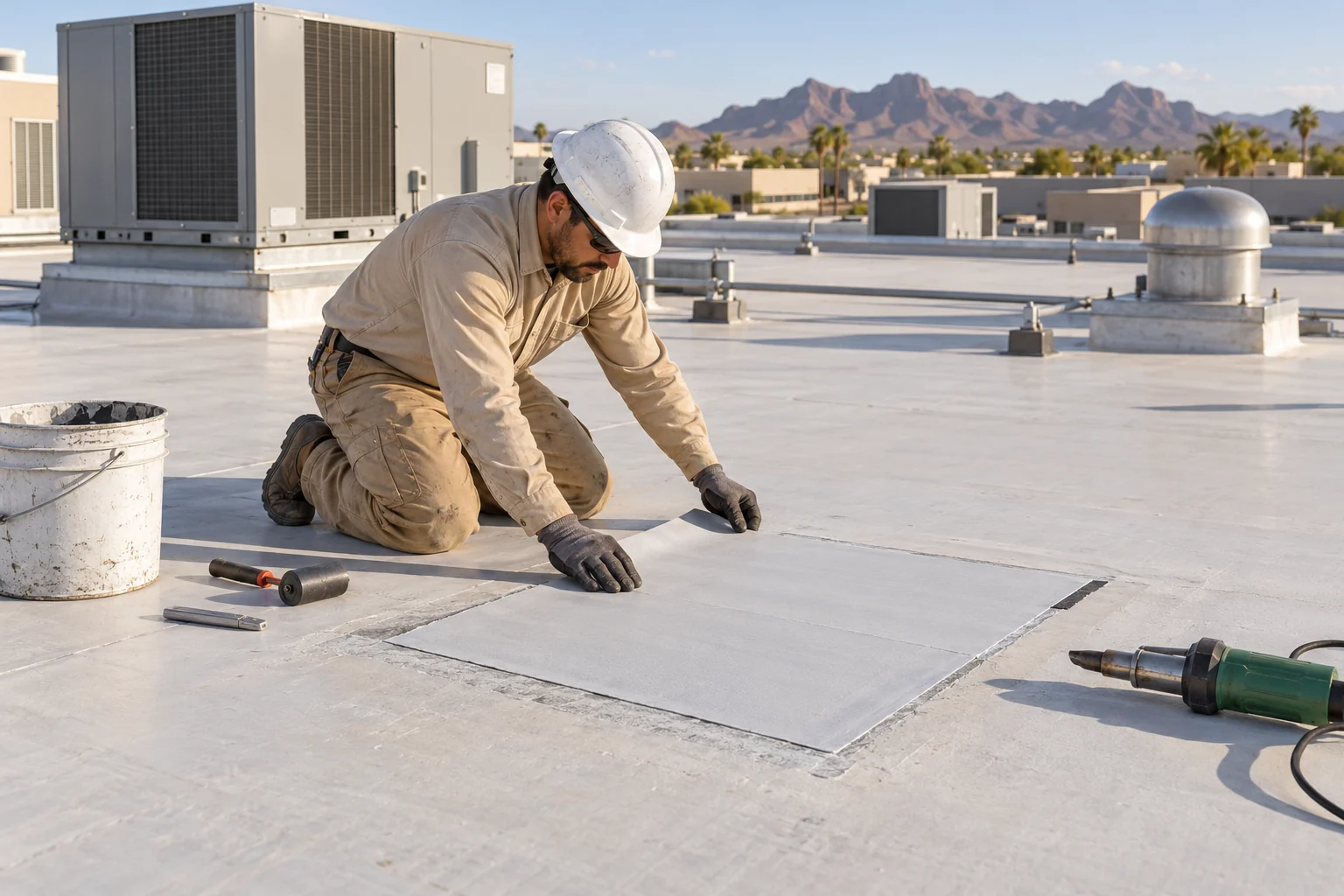
Match The Repair To The Membrane
TPO, PVC and EPDM are different roofing systems. Compatible materials and preparation are required for each. A white roof cannot be identified reliably by color alone, and a generic patch may create another compatibility problem.
We assess the existing membrane and any old repairs in the work area. Loose patches, contamination and weathered surfaces can affect whether a new repair will connect to sound material.
Repair Localized Damage
A puncture or limited seam opening may be repairable when the surrounding roof is serviceable. The repair boundary should extend to suitable material rather than simply cover the smallest visible hole.
Nearby details are checked where they may relate to the same problem. Equipment service traffic, for example, can create more than one damaged spot. Inspection helps establish the actual work area.
Evaluate The Layers Beneath
Where water has entered, insulation or other material may need investigation. A membrane patch alone does not address wet or unstable layers. Localized removal may be necessary before a complete repair can be made.
Extensive deterioration can change the repair decision. We assess those limits without assuming that every damaged membrane needs replacement or that every roof can accept one more patch.
Define A Repair Boundary That Holds
A membrane patch needs to reach suitable material around the defect. If the adjacent surface is loose, contaminated or deteriorated, the repair area may need to be larger than the visible opening. Size is determined by a sound connection, not by minimizing the amount of patch material.
Previous repairs can complicate that boundary. Some remain compatible and well adhered; others may need removal before a new repair can bond or connect properly. The assessment should identify the actual layers instead of treating every old patch as a reliable base.
A puncture near a seam or flashing also needs attention to the adjoining detail. The work may have to incorporate that connection rather than placing an isolated patch where there is not enough suitable field membrane. The roof system guides the method.
Where water has entered, material below may be affected beyond the visible hole. Suspected moisture can require additional investigation. Closing the membrane without considering wet insulation or unstable layers may leave damage concealed beneath the repair.
The aim is a complete local repair where possible. A larger investigation area does not automatically mean a larger roofing project, and a small visible defect does not guarantee a surface-only scope. The findings establish what must be corrected and what can responsibly remain.
Questions About Membrane Repairs
Can TPO and PVC use the same patch? Repairs should be compatible with the specific existing system. Their similar appearance does not make them interchangeable. Material identification and appropriate system instructions are part of selecting the work.
Can EPDM be repaired with the same method as a thermoplastic roof? EPDM has its own compatible seam and repair approaches. A method should not be transferred simply because both roofs use flexible sheet material.
What if the roof has many old patches? The assessment should distinguish sound repairs from unsuitable or failing areas. A patched roof is not automatically beyond repair, but repeated work can indicate a need to investigate the underlying cause and surface condition.
Can a repair be made around equipment? Often, when the detail and surrounding assembly support it. Access and the connection to the curb or penetration need consideration. Planned equipment changes should be coordinated so the repaired area is not immediately disturbed.
Does a membrane repair fix standing water? Not by itself. A drainage concern may involve an outlet, a low area or supporting conditions. The cause should be evaluated separately from the puncture or seam repair.
How can the owner start? Provide the building location, observed symptoms and any known material information. If the membrane is uncertain, select Not Sure. Information from safe locations is enough to begin an appropriate assessment.
A repair quote follows the defect and affected layers. The request form therefore focuses on the problem rather than generating a price from total roof area.
Get A Free Estimate
Use the repair request form with the building address and a description of the damage or leak. If you do not know the membrane type, select Not Sure. The roof assessment establishes the compatible work and scope.
If a repair crosses the boundary between different roof sections, the transition needs attention as well as the puncture or seam. The assessment should establish the materials on both sides and how they connect. A broad patch using one product is not automatically suitable across an uncertain junction, even when the finished surfaces look similar from a distance.