Assess The Roof Near The Problem
Water appearing indoors may have traveled from another part of the assembly. We review the symptom and inspect the relevant roof area, including seams, equipment details and drainage. The location inside is useful evidence but not a complete diagnosis.
If the problem follows rainfall, equipment operation or recent service activity, include that information. Timing can help focus investigation while the roof and nearby components are assessed.
Repair Membranes With Compatible Methods
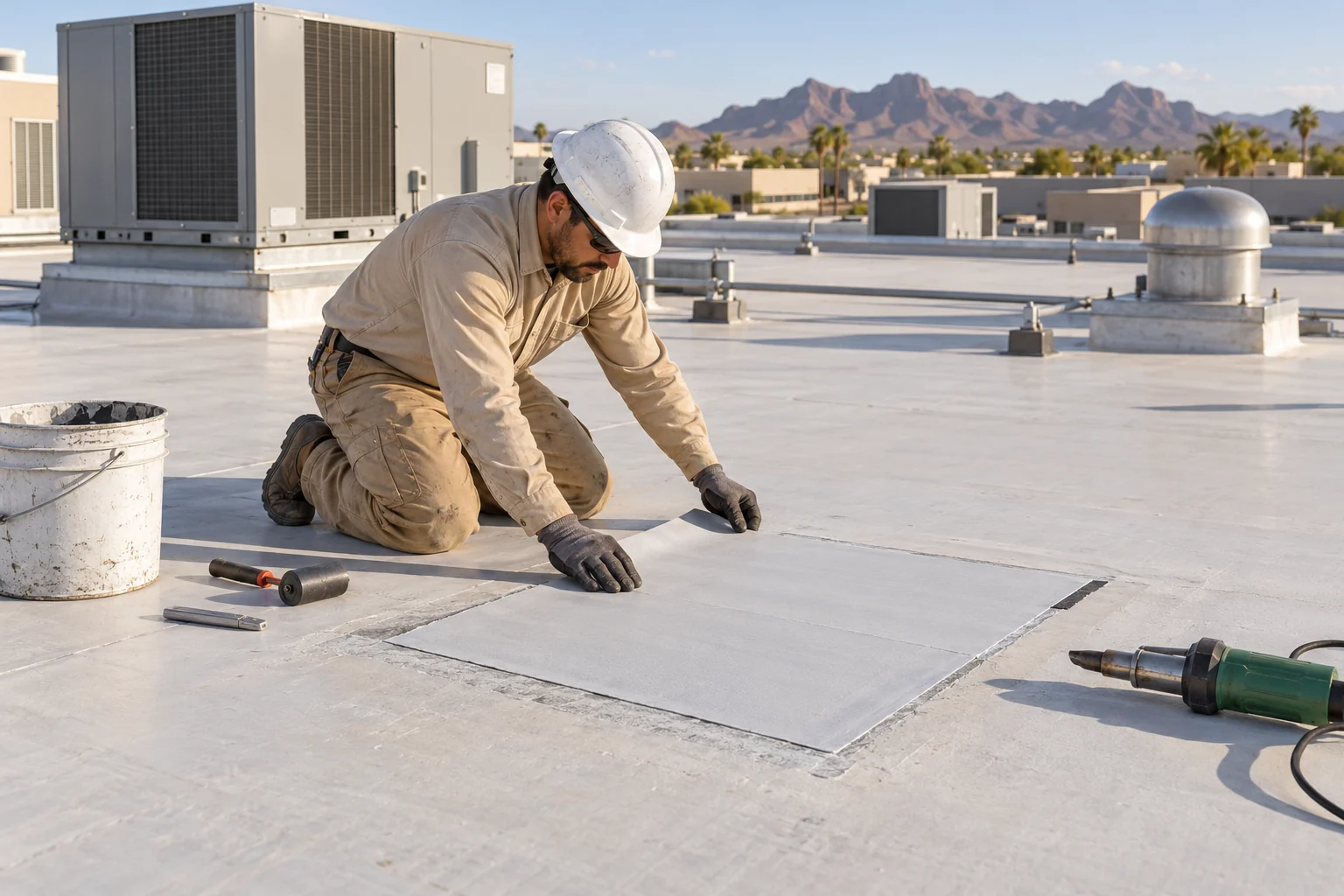
A cut, puncture or seam defect may be repaired locally when the surrounding membrane is serviceable. TPO, PVC and EPDM require their own suitable preparation and repair materials. Color alone cannot reliably identify the roof.
Previous patches may affect the work. Loose or incompatible material may need removal so the new repair connects to sound roofing. A larger patch is not automatically a better repair if the base beneath it remains unsuitable.
Review Equipment Flashings And Edges
Curbs, pipes and perimeter transitions have details different from the open roof surface. A leak near a rooftop unit may require work on the flashing or adjoining equipment rather than a broad membrane patch.
The repair should address attachment and configuration where they contribute to the defect. Covering a loose connection with sealant can leave movement unresolved. Some damaged details are better replaced than repeatedly coated over.
Address Metal Roof Defects
On metal roofs, fasteners, laps and panel damage can create localized work. Surface corrosion should be distinguished from severe deterioration. A coating cannot restore a weakened panel or replace missing metal.
Where sound panels remain, a focused repair may preserve much of the roof. The scope should be based on the actual defect and adjacent condition, with broader restoration considered separately when suitable.
Investigate The Extent Of Damage
Water entry can affect layers below the surface. Suspected moisture may require further assessment before the repair is completed. Localized removal may be necessary to restore a sound assembly rather than only close the visible opening.
A recurring leak does not automatically require whole-roof replacement. It does require understanding whether earlier work missed the source or whether broader deterioration exists. The inspection establishes those distinctions.
Coordinate Access And Property Needs
Commercial properties have different access and operating requirements. Describe sensitive areas, shared access or rooftop equipment that should be considered. The work plan should reflect the building rather than an assumed pattern for the district.
Do not climb onto the roof to gather technical information. Observations from a safe location are enough to begin. An appropriate roof assessment can identify the membrane, details and repair boundary.
Questions Before Requesting Work
Can a localized repair stop a leak? It may when the source is identified and the surrounding material supports the repair. Does a stain reveal the size of damage? No; concealed conditions can differ. Is an area-based calculator useful for repair pricing? It cannot determine the defect or required materials.
Start with the actual property address and a clear description of the concern. Existing roof information is useful if available, but a technical diagnosis is not required from the owner.
Assess Repairs Near Regular Service Routes
A roof area used repeatedly for equipment access may have damage different from general weathering. The inspection should consider cuts, punctures and disturbed details along the relevant route rather than focusing only on the first visible mark. More than one defect may exist, though that must be established by assessment.
The repair material should match the existing system. A patch chosen only because it is readily available can create a compatibility problem or conceal the original surface. Where unsuitable repairs already exist, preparation may include removing them to reach material that can support the intended work.
Future activity should protect the completed repair. Tools, parts and new supports can affect the roof if placed without regard to its surface and details. If an equipment change is planned, coordinate the penetration or curb work with the roofing scope.
This does not mean every damaged area requires a broad restoration or replacement. A defined defect may still be repaired locally when the surrounding assembly remains serviceable. The useful distinction is between the area needing investigation and the material that ultimately needs work.
Describe actual service activity and the symptoms you have noticed. The assessment can then establish whether they are related and whether the repair should include adjacent details or affected layers beneath the surface. The conclusion should follow the roof condition rather than an assumed cause.
Get A Free Estimate
Use the repair form for your commercial building in the Superstition Springs area of Mesa. The request begins a roof-specific assessment, with the final scope determined by material, condition and access.