Review The Symptoms
We start with where and when the problem appears, along with any known equipment changes or previous repairs. That information helps focus the roof inspection.
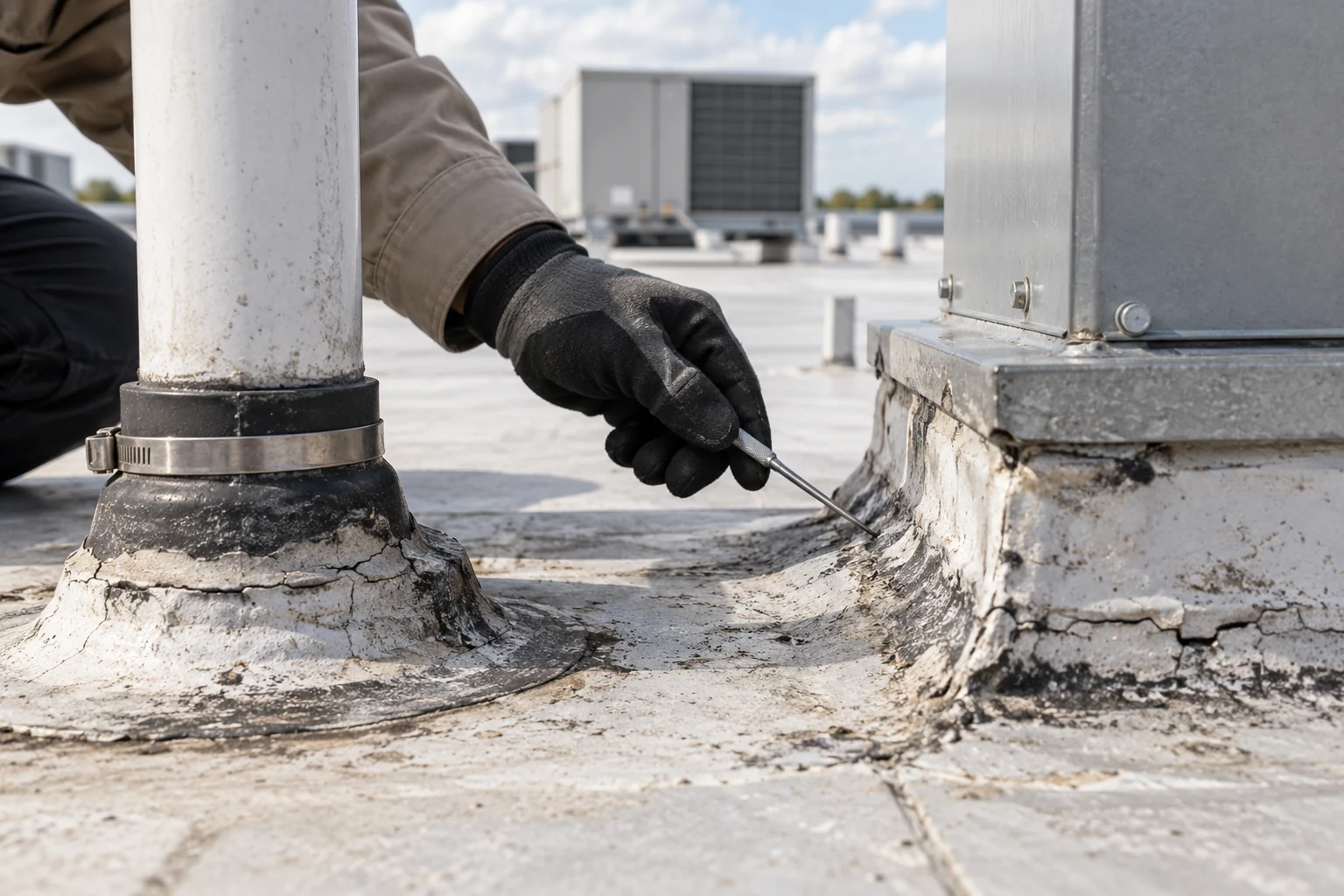
Inspect The Roof And Details
The material, nearby seams, flashings and drainage are examined. Where the source or hidden condition is uncertain, further investigation may be necessary before defining the repair.
Set The Repair Boundary
The work area includes the defect and any surrounding material that cannot support a sound repair. Localized wet or unstable material may need removal rather than covering.
Complete Compatible Repairs
Repair materials and methods are selected for the existing roof system. The detail is addressed as a connection within the assembly, not simply a visible mark to conceal.
Distinguish Investigation From The Repair Area
The area examined may be larger than the work ultimately needed. Water can travel, and nearby seams or details may be relevant even when the interior symptom is localized. Investigation establishes the source; the repair boundary follows the defect and affected material.
A previous patch is useful context but not proof of the current cause. It may remain sound while another detail has failed. The assessment should inspect the actual condition rather than automatically repeat earlier work.
Where material below the surface is uncertain, further investigation may be needed. A patch can close an opening without restoring wet insulation or unstable layers. Localized removal may form part of a complete repair.
The sequence should also account for access and known equipment changes. If a new penetration is planned, coordinate its roofing detail so the completed repair is not immediately disturbed. The goal is a defined, compatible scope that fits the property and the condition found.
Review The Affected Area
The completed repair is reviewed and remaining roof concerns are distinguished from the work performed. Get A Free Estimate to begin with your Mesa commercial property.