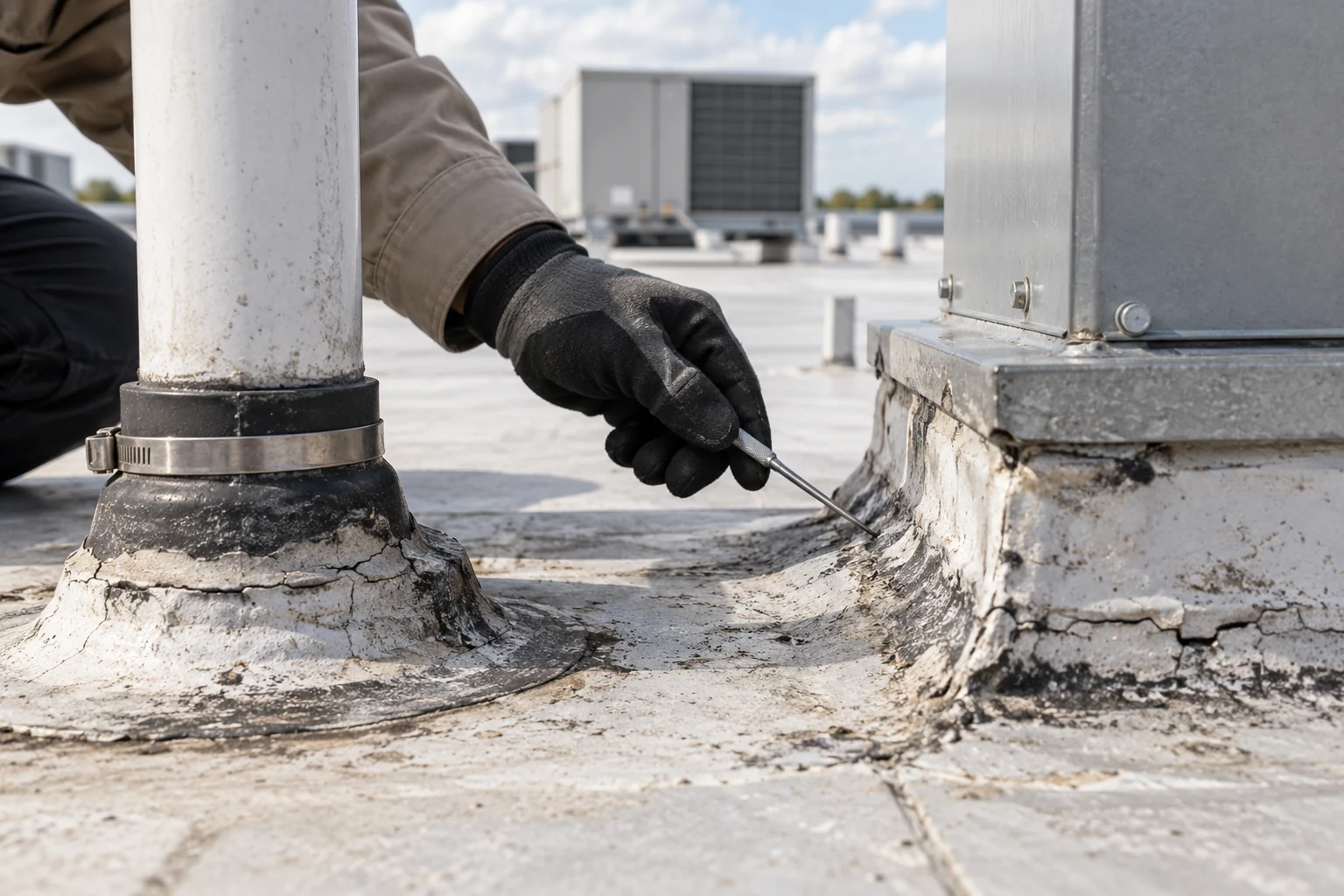
Roof Leak Repair
Leak investigation links interior symptoms with the exterior roof and nearby details. We consider seams, flashings, penetrations and drainage rather than placing a patch directly above a stain without assessment. The source may need further investigation when it is not visible.
Roof Flashing Repair
Flashing connects the roof to walls, curbs, pipes and edges. Open or damaged details may require compatible repair or replacement. A large amount of sealant is not a substitute for a sound connection that suits the roof system.
Membrane Roof Repair
Punctures, open seams and localized damage may be repairable in TPO, PVC or EPDM roofs when the surrounding assembly is suitable. The membrane must be identified so preparation and repair methods match it.
Metal Roof Repair
Metal roof work addresses panel damage, fasteners, laps and penetrations. Corrosion and unstable attachment need their own evaluation. Coating or sealant cannot restore the strength of severely deteriorated metal.
Establish The Extent Of Damage
A small defect can affect material beneath it, while a large interior stain may come from a localized entry point. We assess both the source and the surrounding condition before setting the work area.
Get A Free Estimate
Describe the issue and the commercial building location in the request form. Choose the closest service, or use Not Sure if the roof system or cause is unknown.
Investigate Before Choosing A Repair
Our repair services address different parts of a commercial roof, but the first inquiry can begin with a symptom. You do not have to know whether a leak comes from a seam, flashing or panel connection. Describe what you have observed so the assessment can focus on the relevant building area.
Water may travel through parts of an assembly before appearing inside. For that reason, the stain location and the roof entry point are not always the same. Investigation connects the interior report with roof condition and nearby details before a repair method is selected.
Compatibility Is Part Of The Work
Membranes and metal systems require appropriate materials and preparation. TPO, PVC and EPDM should not be treated as interchangeable because they look similar or cover the same type of building. Existing coatings and patches can also affect what will bond to the surface.
Where old repairs are loose or unsuitable, adding another layer may not create a sound connection. The scope may need to remove or correct those materials first. Product information from previous work is helpful when available, but missing records should be treated as a question to resolve rather than an invitation to guess.
When A Small Repair Is Appropriate
A defined puncture or failed detail in an otherwise serviceable roof can sometimes be addressed locally. The assessment considers the surrounding material and any affected layers below. This helps keep the work proportionate while avoiding a surface-only repair where damage extends into the assembly.
If deterioration is widespread, the appropriate recommendation may be broader. Repeated leaks do not automatically prove replacement is necessary, but they warrant understanding why previous work has not resolved the concern. A practical scope should explain the findings and the limits of the proposed repair.
Coordinate With Building Operations
Commercial properties may have restricted access, occupied areas or equipment that affects how work is arranged. Identify these conditions early. The roofing assessment can then be planned with the property contact, and any needed coordination with equipment servicing can be discussed.
Future rooftop activity also matters. New penetrations or changes around equipment can affect repaired details. Retain information about completed work and communicate planned alterations so the roof is considered when other work is scheduled. A repair should become part of the building’s maintenance record.
Prepare Your Repair Request
Provide the street address, the part of the building affected and a short account of the problem. If there has been earlier work, include what you know about its location and timing. Use photographs already available from safe locations; there is no need to enter the roof area to complete the inquiry.
The form does not assign an automatic cost because roof area alone cannot describe a repair. The material, defect, access and condition around the work determine the scope. An assessment is needed before the service can be priced for your particular commercial property.
Interior Observations
You can describe a roofing concern without diagnosing it. Note whether water appears during rain, after rain or under other conditions, and identify the affected room or unit. These observations can help guide investigation. Keep clear of wet electrical equipment or visibly unstable areas, and arrange appropriate building access through the property contact. Include separate affected units when applicable.